E/F – The Glass of New Orleans: a tale of sons, fathers, Mannings, my mother, and a bunch of Superbowls

E.  All the blood, sweat, and tears it takes to realize that you’ll never appreciate winning unless you know how to lose.

F.  The resilience of the forgotten, the underdogs, the left-behind, and the lost in time, whose story one day becomes everyone’s, making all of us just a little bit better than we were before.

Oh – and the smell of garlic bread and fried oysters, creamy red beans, and my grandmother’s tomato-colored jambalaya.  Ernie K-Doe’s mother-in-law.  Po-boys at Domilise’s.  And above all, the New Orleans Saints.

The Glasses

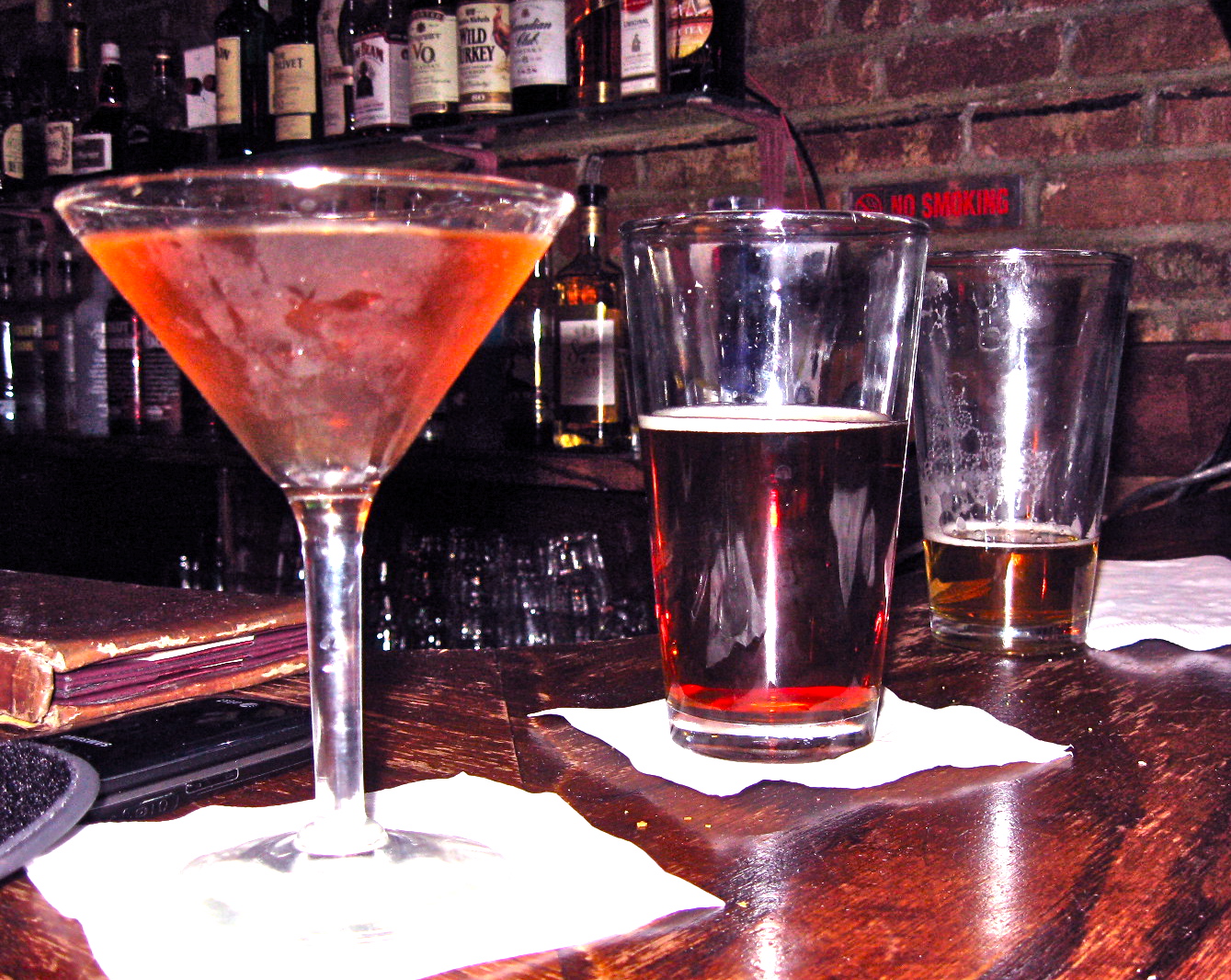
Half-time, February 7, 2010.  Superbowl 44.  New Orleans Saints 6, Indianapolis Colts, 10.  The glasses aren’t so full.  The Maker’s Manhattan was just ordered by a New Orleanian wanting to soothe his anxiety.  The next beer, at half mast, was being nursed by a lawyer from New Jersey who wasn’t so deeply invested in the game but nonetheless wanted us all to be happy.  The last glass, beer again, belonged to an office administrator from New Jersey who discovered an unforeseen attachment to the Saints as her emotions boiled up and over during the course of this back-and-forth duel between an intrepid underdog and a (s)lumbering giant.  Our locale:  The Village Pourhouse (64 3rd Ave at 11th Street, Manhattan).  An hour and a half later, the game was over:  New Orleans Saints 31, Indianapolis Colts 17.  Who dat say they gonna beat them Saints?

The Story

When I was little, we used to listen to the Saints games on the radio while doing chores around the house – cleaning the garage, trimming the lawn, weeding the gardens, and so on.  The games were called on WWL-AM by Wayne Mack and Danny Abramowicz.  Mack had achieved fame as “The Great McNutt,” a local radio and television personality who ran Three Stooges shorts on Channel 6.  Abramowicz was the Saints’ leading receiver from 1967 (their first season) to 1972.

Whenever I could, I wore my #8 Archie Manning jersey to school beneath my khaki uniform.  I used to hide the jersey from my mother to keep it out the wash and continue wearing it.  Archie was incarnation of our city, a would-be superstar hobbled by a supporting cast that never allowed him to shine like we all knew he could.  Archie’s 35 wins, 101 losses, and 3 ties is the worst winning percentage (26.3) among NFL quarterbacks with more than 100 starts.  But you wouldn’t know that from the way we still talk about him.  Archie eventually joined Danny and Wayne to call the games on WWL.

On December 9, 1973, I went to my first Saints game at what was then Tulane (or Sugar Bowl) Stadium.  I was all of 9.  We drove up and parked somewhere uptown, and then we walked to the stadium on the “neutral ground” (what folks in New Orleans called the median) of South Claiborne Avenue – my brother, my father, me, Uncle Howard, and cousin Brett.  The Saints played the San Francisco 49ers that day and won, 16 to 10.  The odds of catching a winning game at that point in the team’s history were about 1 in 3.

Later, in high school, our band joined 3 other Catholic High Schools to form a mega-marching band when the Saints played Philadelphia on September 16, 1979.  Conley, the tuba player, ran into to Archie coming out of the tunnel and reported the encounter to all of us like one who had run into a Titan.  The Saints’ first touchdown was a 52 yard bomb from Archie to Wes Chandler.  Our guys lost, but it didn’t matter.  They were our heroes and we got to march on the greatest field in the world in front of all the fans.  It was the highlight of our marching band season.

The next year, the Saints went 1 and 15 and the fans began coming to the games with paper bags over their faces – mimicking the then-famous Unknown Comic of Gong Show fame and calling the team The New Orleans Ain’ts.  The agony of what it was to be a Saints fan can be summed up, Harper’s Index-like, by reviewing their stats over the team’s 44 years of history, including the Superbowl season of 2009.

First season:  1967

First season to break-even: 1979

First winning season:  1987

First playoff victory:  2000

Total winning seasons:  9 (of 44)

Total break-even seasons:  7

Total losing seasons:  27

Number of seasons with double-digit losses:  14

I was of course elated and ecstatic on February 7 when Tracy Porter intercepted Peyton Manning, Archie’s hall-of-fame son, toward the end of Superbowl 44 and returned the pic for a touchdown, all but sealing the Saints’ victory.  As they shouted “who dat” here in New York, I remembered when they first started saying “Who Dat?” back in the day when winning 2 games in a row resulted in shouts of “The Saints are going to the Superbowl!”  Now here it was.  Finally.  And they actually won the game.  The Bible itself holds no words to describe such an event.

From my perch at The Village Pourhouse on Manhattan’s Lower East Side, I called my father, who was at my brother’s house in Nacogdoches, Texas.  Over the background din in both of our respective locales, I choked up a bit and said, “Mom would have loved to see this.  She must be smiling up in heaven.”

Mom’s First Big Superbowl

The Saints victory brought me back in time, to 1975, when the Pittsburgh Steelers won their first Superbowl.  It was a family event that had us all together around the television, breathless, excited, and cheering.  My mother grew up in Monessen, Pennsylvania, a steeltown on the Monongahela River about an hour outside of Pittsburgh. In 1969, her mother left Pennsylvania and moved in with us in Louisiana.  I remember them talking about it after the game – “after 40 years, finally!  It’s about time!”  The Steelers were apparently as hapless as the Saints for most of their history to that point.  It took the mighty Steelers, who now own 6 Superbowl titles (more than any other team) 42 years to get it done.  The Steelers pre-Superbowl stats:

First season:  1933

First season to break even:  1936

Mom is born, Monessen, Pennsylvania:  1940

First winning season:  1942

Total winning seasons, of first 42:  10

Total break-even seasons:  5

Total losing seasons:  25

Number of seasons with double-digit losses:  4

Superbowl:  1974 (season)

Of Fathers and Sons

Nowadays in my Brooklyn apartment, I sometimes listen to the Giants games on 660 WFAN.  Archie’s youngest son, Eli, calls the signals for Big Blue.  “Manning drops back and fires one over the middle . . .” and I am right there in 1978, cleaning the garage, growing up, wearing my Archie Manning jersey.  Only I’m not.  I’m 46 and my 7-year old son is listening to the Giants game with me.  He’s got his own Manning jersey, big and blue #10, for Eli.

Drew, Brittany, and Baylen in the glow of victory

One of the beautiful things about life is its circularity, and that’s how it felt on February 7.  The great wheel goes round again and again, and with it our memories and lives lived, yet alive again.  Archie Manning never played in a Superbowl, much less a winning season, but his sons Peyton and Eli each quarterbacked Superbowl victories in 2007 and 2008, and each was named MVP for the game.  In the moments after drew Brees won his Superbowl MVP in 2010, he lifted his own baby boy up in the blaring lights.  Father to son, and father to son, so it goes.

Of all this, my mom, mother to two sons, would be proud.

Notes and Credits

The opening photo of glasses on the bar at the Village Pourhouse is from the author’s personal collection.

The photo of Drew Brees with his son, Baylen, and wife Brittany, was taken by David Bergman and is used here with permission.  The photo made the cover of Sports Illustrated – Bergman’s 8th SI cover – the week after the game.  David’s site has much more about his work, and you can watch the slides roll past of photo after wonderful photo.

The New Jersey office administrator whose quarter-filled beer is in the lead photo is hereby forgiven for her devotion to the Boston Red Sox.

On a personal note, I began writing this post the day after the Superbowl, but it took a while to finish.  The main reason was that I recently took a regular paying job and had a bottleneck of work to complete that is finally playing out.  The light at the end of the tunnel seems to be growing, with new essays and a number of E/F postings in the weeks to come.

In Memoriam

Mary Krupa Guidry, 1940-2007
9 Comments

Filed under death, fathers, ideas, life, sons, struggle, truth

The truth and money

The truth is that money is often a divisive influence in our lives.  We keep our bank balances secret because we worry that being candid about our finances will expose us to judgment or ridicule—or worse, to accusations of greed or immorality.  And this worry is not unfounded.

Jenny Offill and Elissa Schappell, Money Changes Everything (New York:  Doubleday, 2007), p. xi

Brooklyn Reading Works:
The Truth and Money

On April 15, 2010, the Brooklyn Reading Works will present its monthly writers’ program on “tax day.”  This happy accident, observed last summer in a casual conversation over coffee with Louise Crawford, resulted in the idea for a panel called “The Truth and Money,” a reading and Q & A with three authors whose work has taken on money in some significant way.

Our three panelists are:

Elissa Schappell, a Park Slope writer, the editor of “Hot Type” (the books column) for Vanity Fair, and Editor-at-large of the literary magazine Tin House. With Jenny Offill, Schappell edited Money Changes Everything, in which twenty-two writers reflect on the troublesome and joyful things that go along with acquiring, having, spending, and lacking money.

Jennifer Michael Hecht, a best-selling writer and poet whose work crosses fields of history, philosophy, and religious studies.  In The Happiness Myth, she looks at what’s not making us happy today, why we thought it would, and what these things really do for us instead.  Money—like so many things, it turns out—solves one problem only to beget others, to the extent that we spend a great deal of money today trying to replace the things that, in Hecht’s formulation, “money stole from us.”

Jason Kersten, a Park Slope writer who lives 200 feet from our venue and whose award-winning journalism has appeared in Rolling Stone, Men’s Journal, and Maxim.  In The Art of Making Money, Kersten traces the riveting, rollicking, roller coaster journey of a young man from Chicago who escaped poverty, for a while at least, after being apprenticed into counterfeiting by an Old World Master.

Please join us for the event at 8:00 p.m. on Thursday, April 15, 2010, at the Old Stone House in Washington Park, which is located on 5th Avenue in Park Slope, between 3rd and 4th Streets, behind the playground.

Read about all the Brooklyn Reading Works events at Only the Blog Knows Brooklyn and the BRW website.  For info on the Old Stone House and its role in the Battle of Brooklyn (1776) and contemporary life in Park Slope, go here.

Many thanks from all of us at Truth and Rocket Science to Louise Crawford, of Only the Blog Knows Brooklyn, for making this possible.

Money, It’s a Gas

The subtitle on the cover of Elissa Schappell’s book says everything you need to know about the stories within:  Twenty-two writers tackle the last taboo with tales of sudden windfalls, staggering debts, and other surprising turns of fortune. “The last taboo” is how Schappell and her co-editor, Jenny Offill, characterize our behavior when it comes to money, because nobody really wants to talk about it.

People are secretive and embarrassed—for having too little, or too much, or something to hide about the reasons either way.  In a country where everyone seems to have a story of how they, or their parents or grandparents, used to be poor, any personal narrative but “hard work” is out of the question.  Even hardened criminals revel in detailing the blood, sweat, and tears that go into their “work.”  No one, it seems, can sit back and say with no embellishment or apology, “I got lucky, that’s all.”  Money is the measure of what we deserve, and in our society what we deserve is in some sense who we are.

In The Happiness Myth, Jennifer Michael Hecht seeks to disentangle why things that are supposed to make us happy frequently don’t.  To the notion that “money doesn’t buy happiness,” she shows that it does, to an extent.  For most of human history (and pre-history), people have lived in conditions of terrible, frightening, life-threatening scarcity that money in no small part has eradicated for all but a very small fraction of Americans.  (In line with Schappell’s notion of money-taboo, I now feel the urge to apologize and state something statistical about hardship and inequality in America, but I won’t.  We deserve ourselves and all of our money issues.)  Hecht writes,

“We need to remember that most people through history have been racked by work that was bloody-knuckled drudgery, the periodic desperate hunger of their children, and for all but the wealthiest, the additional threat of violent animals.  Nowadays a lot of what we use money for is a symbolic acting-out of these triumphs.”

Once out of poverty, in other words, what we do with money—or more precisely the things we feel when using money—have a lot to do with ancient urges and inner conflicts that endure in our minds, bodies, and culture across time and without, so it seems, our self-conscious awareness of them.  Money does buy happiness, up to the point we’re out of poverty, and then the real problems begin.

Like the craving for fat and things that are sweet, the urges we satisfy with money are deeply embedded in our being, fundamental to the way we evolved in the most far-away places and times.  It’s all fine and easy to understand or forgive, but we all know what happens when you eat too many doughnuts.

Doughnuts to Dollars

Yet money is not like a doughnut.  This we all know—money isn’t some thing, it’s just some non-thing you use to get doughnuts or whatever else you think you need.  The economists’ word for this quality is fungible.  Adam Smith introduced money in his great book on wealth by reviewing the things that societies have used for exchange measures over time, including cattle, sheep, salt, shells, leather hides, dried codfish, tobacco, sugar, and even “nails” in a village in Scotland that Smith knew of.  All this was terribly inconvenient, and Smith noted that the use of precious metal as a stand-in for things of value constituted a considerable advance—

“If, on the contrary, instead of sheep or oxen, he had metals to give in exchange for it, he could easily proportion the quantity of the metal to the precise quantity of the commodity which he had immediate occasion for.”

Money in this sense becomes nothing but a means of measurement, and it would be perfect indeed if money’s effects on the world ended there, but we all know that they don’t.

Money—as Elissa Schappell and Jenny Offill, Cyndi Lauper and conventional wisdom tell us—changes everything.  Money’s magical qualities go well beyond simple notions like greed.  Money’s powers are existential, transformative, and really weird.  Money makes us into things we are not.  Karl Marx was pretty blunt about this—

“Money’s properties are my properties and essential powers … what I am and am capable of is by no means determined by my individuality.  I am ugly, but I can buy for myself the most beautiful of women.  Therefore I am not ugly, for the effect of ugliness—its deterrent power—is nullified by money.  I, in my character as an individual, am lame, but money furnishes me with twenty-four feet.  Therefore I am not lame.  I am bad, dishonest, unscrupulous, stupid; but money is honored, and therefore so is its possessor.  Money is the supreme good, therefore its possessor is good.  Money, besides, saves me the trouble of being dishonest:  I am therefore presumed honest.  I am stupid, but money is the real mind of all things and how then should its possessor be stupid?”

Marx may have fallen short as an economist, but then again so do most official economists.  In terms of money’s most basic ontological properties, however, it’s worth noting that he got money right.

The Glow

In the story of master counterfeiter Art Williams, Jason Kersten tells one such story of how money changes people, their values, and the truths that bind them together.  Art’s counterfeit was of an extraordinarily high quality, and its effect on people was fascinating to behold.  Art called it The Glow—“They would get this look on their face … a look of wonder, almost like they were on drugs.  It was like they were imagining the possibilities of what it could do for them, and they wanted more.”

Like the anonymous subjects of history in Hecht’s writing (note:  that’s us), Art wanted something that money, or the lack of it, had apparently stolen from his life.  Art’s “pursuit had very little to do with money, and the roots of his downfall lay in something impossible to replicate or put a value on.  As he would say himself, ‘I never got caught because of money.  I got caught because of love.’”

So where does money get us?  It’s easy to tell stories of money and doom, but we all know that without enough of it we’d be unable to do anything we need to do, let alone the supposedly unnecessary things that seem to make up for the drudgery of a life built upon doing the things we need to do.  Is the grubbiness of money as it comes off in the Pink Floyd song all there is to it?  Or is there more?

Join us on April 15, after affirming the give-away of twenty-eight percent (for most of us) of your annual harvest.

Questions:  jguidry.7@gmail.com or 212.729.7209.

Credits and Notes

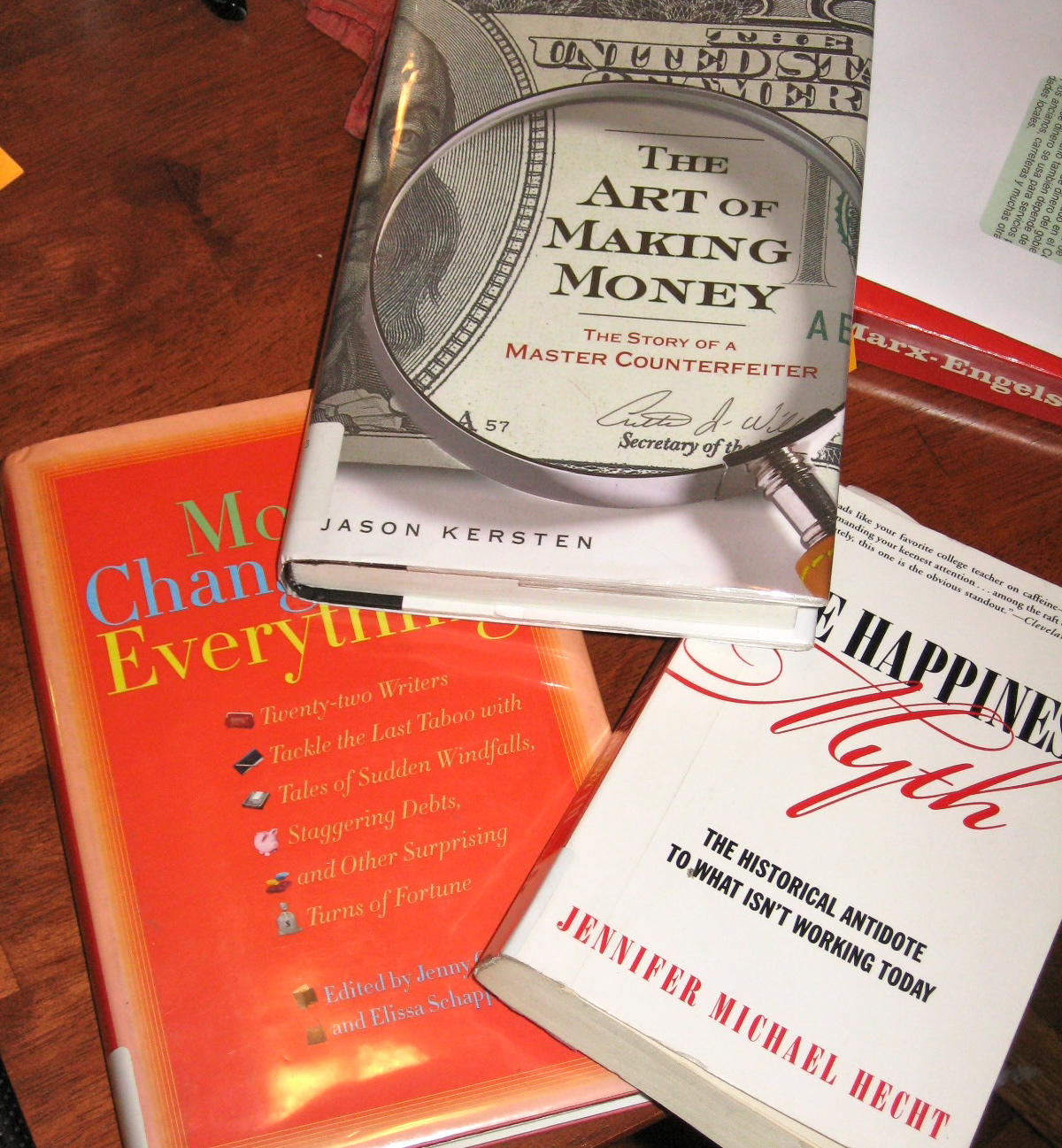
Many thanks to Louise Crawford for inviting me to curate the Tax Day BRW panel, through the Truth and Rocket Science blog.  A sincere debt of gratitude, not to mention late fees, is owed to the Brooklyn Public Library, for enabling my research and inquiry into this topic.  The BPL’s copies are indeed those photographed on my dining room table to lead the blog post.

Jenny Offill and Elissa Schappell, Money Changes Everything (New York:  Doubleday, 2007).

Jennifer Michael Hecht, The Happiness Myth (New York:  Harper One, 2007), p. 129.

Adam Smith, The Wealth of Nations, in Robert L. Heilbroner, ed., The Essential Adam Smith (New York:  W. W. Norton, 1986), p. 173.

Karl Marx, Economic and Philosophic Manuscripts of 1844, in Robert C. Tucker, editor, The Marx-Engels Reader, 2nd ed. (New York:  W. W. Norton, 1978), p. 103.

Jason Kersten, The Art of Making Money (New York:  Gotham Books, 2009), p. 152 (first quotation) and p. 4 (second quotation).

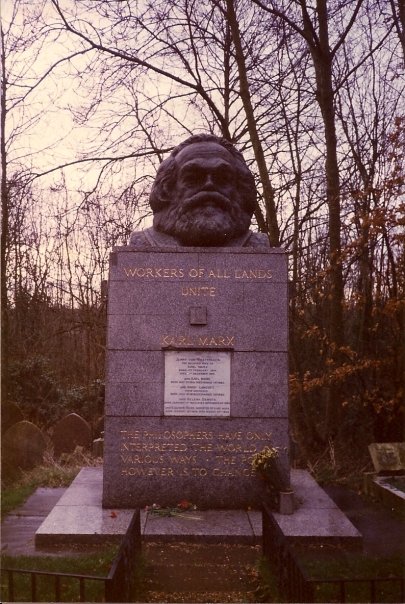
Photo Karl Marx’s grave, Highgate Cemetary, London, taken by the author in January, 1994, while on layover on the way to South Africa and its historical elections later that year.

5 Comments

Filed under Adam Smith, art, beauty, body, freedom, ideas, individuality, love, money, myth, philosophy, riches, truth, vanity

E/F – the glass of knowledge

halfglass-apple-1

E.  “. . . the eyes of both of them were opened, and they realized that they were naked . . .”   Genesis 3:6

F.  “A little learning is a dang’rous thing;
Drink deep, or taste not the Pierian spring:
There shallow draughts intoxicate the brain,
And drinking largely sobers us again.”

Alexander Pope, “Essay on Criticism,” ll. 215-18

For some, knowledge leads down the path to hubris, a “revenge of the intellect” as Susan Sontag warned (ironically, some might say) in “Against Interpretation” (1966).  For others, knowledge is the source of enlightenment.  Know thyself:  as inscribed on the Temple of Apollo at Delphi and lived by Socrates, for whom the knowledge of anything was only as good as its limits.

However we look upon knowledge or follow where it leads, it’s almost certain we’ll wind up somewhere never intended, with consequences for good or ill that we may barely understand.  Such is the way of truth.

The glass and St. Rita’s Church

The tumbler is half-filled with Apple and Eve apple juice, all natural, no added sugar, of unknown yet possible relation to the juice of the apples of the tree of the knowledge of good and evil.  At least that’s what I take away from the company’s name.

The etching on the glass is of St. Rita’s Church, Harahan, which was founded in 1950 by Monsignor Roy Champagne, who was a young priest at the time.  The tumbler was part of a larger set created in 2000 for the parish’s 50th anniversary.

I went to St. Rita’s school from the fourth through seventh grades, and Fr. Champagne (he wasn’t a Monsignor yet) was still walking the grounds with the children and saying mass on Sundays.  I attended church there until I left my parents’ home in 1986.  For many years, I performed with, and then led, the youth choir.  My son was baptized at St. Rita’s.  I now attend St. John’s Episcopal Church in Park Slope, Brooklyn, but St. Rita’s is a cherished part of my life.  It is a place I return to from time to time, to walk in the past and present, and to reflect on the lessons of knowledge and ignorance in my own life.

The desk and a dual journey from Michigan to Illinois

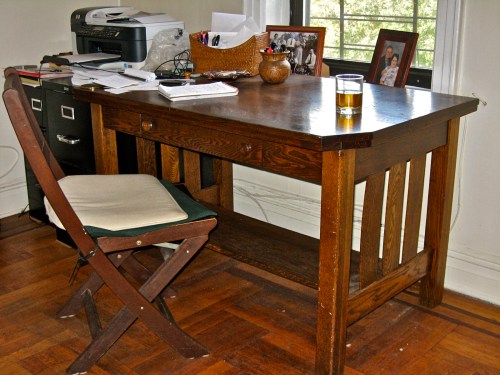
The tumbler was photographed on my desk, a sturdy workshop piece in the Mission Style, dating from the 1920s or 1930s (I am guessing here).  I bought it in Rock Island, Illinois, in 1997 for $100.00 in rough but usable shape.

IMG_3245

a sturdy writing companion

The desk was made in Michigan, by the Wolverine Manufacturing Company of Detroit.  The company was organized in 1887, according to the tag, and at least this one desk is still going strong.  Wolverine Manufacturing was one of the historical suppliers of parlor and other furniture in the Arts and Crafts style.  I wonder sometimes at the happenstance (some might say magic) by which I took a similar route from Michigan, where I obtained my doctorate in 1996 from the university in Ann Arbor, to Rock Island, where I began my first teaching appointment the same year.

Almost everything that has been posted in truth and rocket science was written at this desk.

Notes and credits

The photos of the tumbler and the desk were taken by the author.

This image of the Wolverine Manufacturing Plant was taken from the State of Michigan’s Twentieth Annual Report of the Bureau of Labor and Industrial Statistics (Lansing, 1903), as found on Google Books.

Geotag: St. Rita’s is at 7100 Jefferson Highway, Harahan, Louisiana, 70123.  St. John’s Episcopal is at 139 St. John’s Place, Brooklyn, New York, 11217.

2 Comments

Filed under beauty, ideas, knowledge, Park Slope, philosophy, truth, youth

The truth and amoebas

The mighty amoeba

Your body isn’t your own,
exposed for all it really is:
permeable, full of holes,
part of the world.
A floating thing tossed and spit
on tumbling water not always clear,
you become home to others,
little animals here
at play in the world.
You could be a tree, or grass, under
tiny feet that make no sound of their own,
their steps heard in quickened heartbeats
and restless groans
that shake the world.
You’re full of holes that leave
you open, a window lost of glass,
panes rattling, short of breath,
waiting, waiting, hoping to pass
this sense of a world
stumbling moments from death,
moments from life.

____________

The name of the poem is Sickness.  I wrote it in Belém in February of 1993, as I was coping with the onset of amoebic dysentery.  It was rather a rough time, and this, the worst and latest in a cascade of different ailments since my arrival in Brazil the previous November.  I was adjusting to my new home, I told myself, but I began to re-conceive my relationship to the world.  Except for a bout of the flu at age 9 and a one-day bug at age 13, I’d never been seriously ill in my life.  When I met the amoebas, my body-as-fortress gave way to a new understanding of myself as a being in the world, no different really than a bug, participating in the world along with all the other creatures of existence, open to all those creatures, part of the landscape.  In the world – the amoebas helped me understand Heidegger and Sartre.

We’re all part of the landscape here, guests of each other, parts of each other.  Somewhere in the human genome, shot through my body and yours, there is DNA that we inherited from a common of ancestor with amoebas.  According to Richard Dawkins in his lovely The Ancestor’s Tale, our most recent common ancestor (MRCA in biospeak) would have existed between about 1.3 and 2 billion years ago.  This being, some kind of single-celled thing, would have eventually given rise to amoeba and other protozoans, in one evolutionary path, and the things that became plants and animals on another path.

Most recent common ancestor, collapsed tree

All creation is locked in struggle for the limited energy of this world.  This struggle produces rainforests when so many beings stretch to outdo others in an effort to trap the sun.  The struggle produces abundance as well as scarcity, cooperation as often as annhiliation, and a long-standing collaboration between us humans and the hoards of friendly bacteria (and even some amoeba) that live inside our bodies and help us be “human,” as it were.

Notes and Credits

A really interesting article about amoebas can be found here, by Wim van Egmond, and it includes really great photos of amoebas in action.  The photo of an amoeba at the beginning of this posting is taken from the site, Helpful Health Tips, which discusses the causes and treatments for amoebic dysentery.  More detail on the different kinds of amoebas can be found in this piece on Innvista.  Getting past dysentery meant mountains of Flagyl and a lot of examinations and tests, not only in Brazil but also after I got back to the US in 1993 and in 1994.  I never was the same again, but then again, were we ever?

When I was looking around the web for amoeba-related sites, photos, and such, I came across this company, Rogue Amoeba Software, LLC, and it’s blog.  It has nothing to do with this post specifically, except that it’s a very cool name for a company, and especially suggestive for a software firm.  Our computers and their software are, like our bodies, permeable, full of holes,
part of the world
.  We’ve made information systems in our image, both on purpose and by accident, just as it was presumed by some we ourselves were made.

4 Comments

Filed under ageing, body, brasil, Brazil, entropy, existentialism, life, philosophy, truth, vanity, youth

The truth and the still

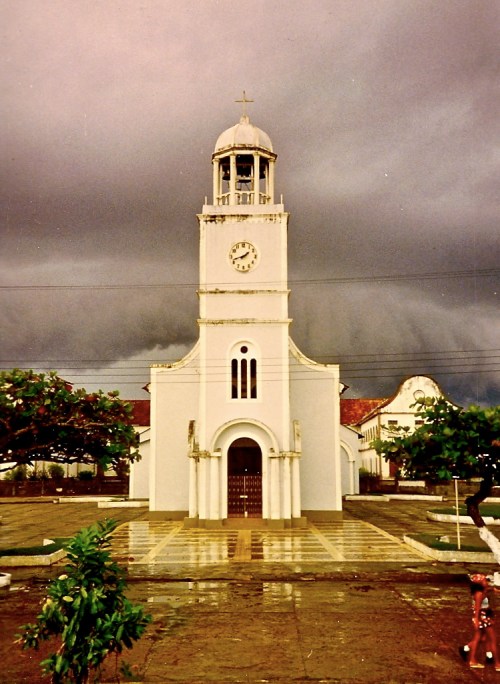
Parintins, Brasil 1993

The still photograph is not so still.  The photograph asks questions.  It suggests a story.  It presents an idea in a language without words.  It is even as it signifies. Video killed nothing, and the still photograph survives (even as the radio star carries on).  Unlike video, you can take the still photograph in.  You have a role in your experience of the photograph.  It speaks to you at a speed that you can handle, that doesn’t overwhelm, that invites your participation and imagination.  You can look into its nooks and crannies and seek out all it has to offer.  All this at your own pace, and for your own reasons.

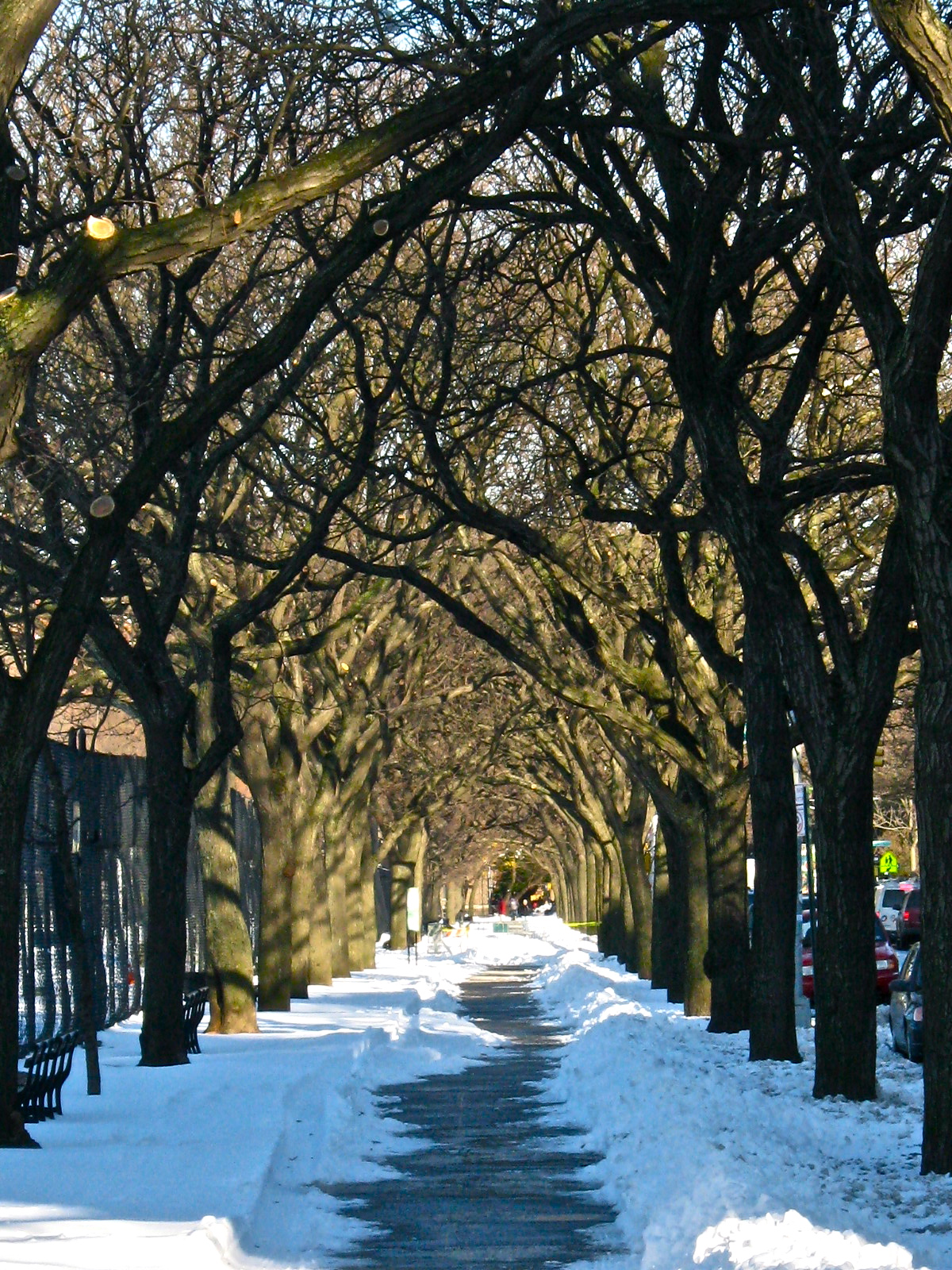
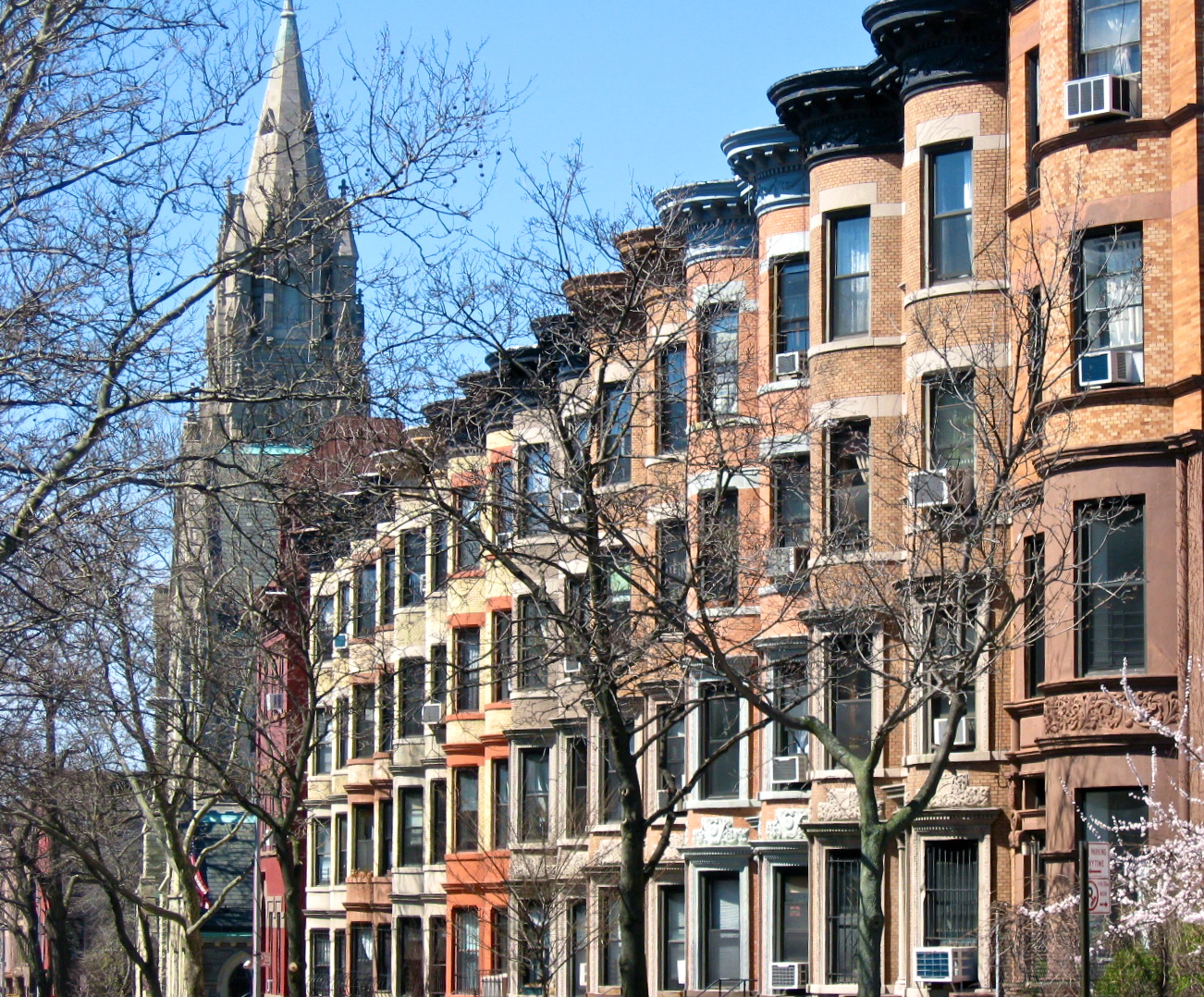
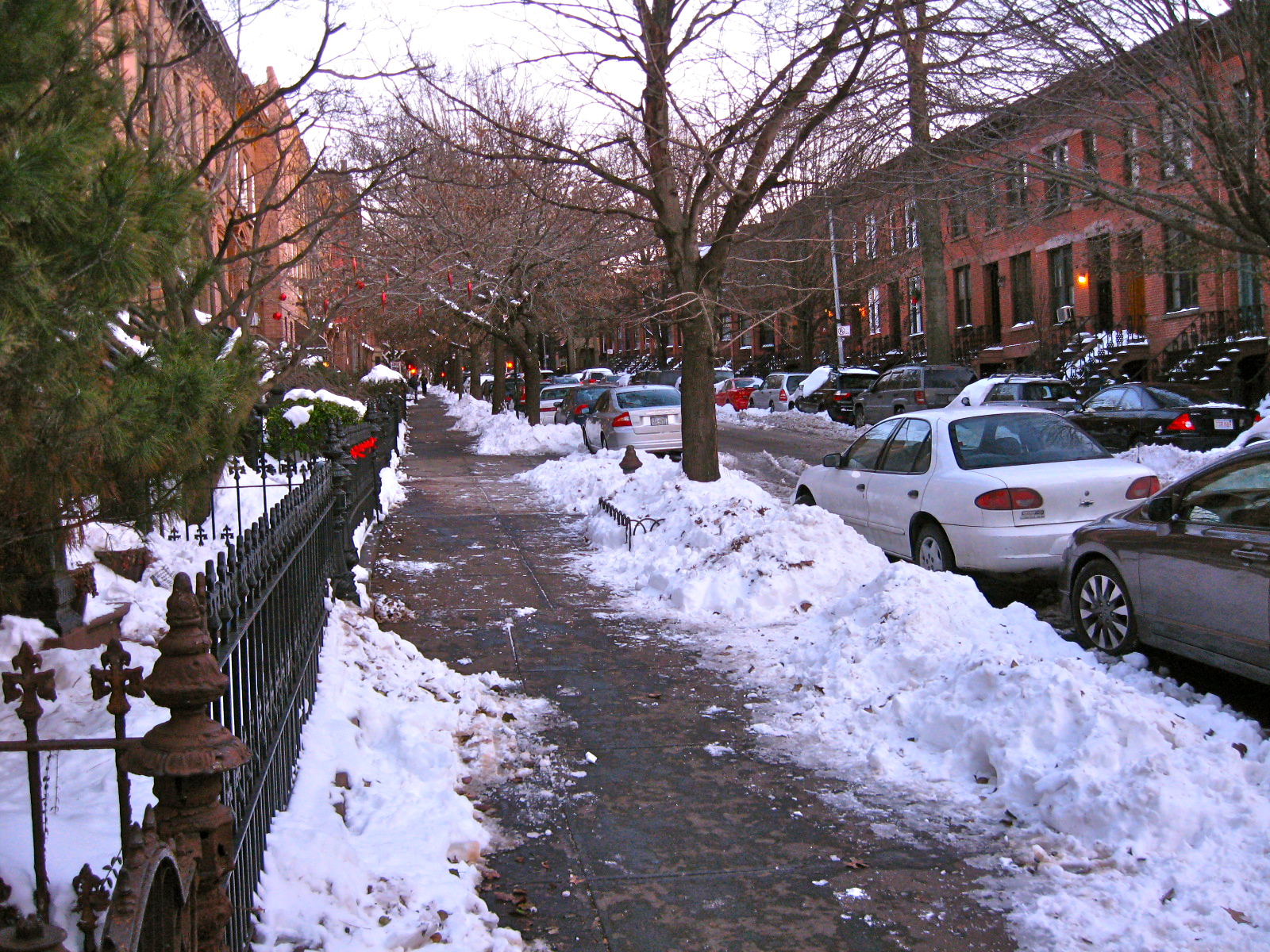
Snow on Sterling Place, Brooklyn 2005

The still photograph is a water that runs deep.  If it seems to sit there, that’s its charm.  The still makes you active, because it’s impossible to just look.  Indeed, that’s the point, and all the while the still is not nearly inert.  It just moves differently, at a different pace, like a tree.

Detail of a rock on the beach, Long Island Sound, 2009

You fill the stillness with motion, the silence with voices.  You hear these people, feel the breeze come across the flowers, sympathize with a long face or smile with happy eyes.  Or you imagine the immediate suspension of all motion and noise and concentrate on only the image and the miracle of capturing time itself.

Intensity . . .Prospect Park, Brooklyn, 2009

Video?  Its harsh, grating noise, the motion too fast to keep up with – video steals your ability to think about what you’re seeing and replaces your mind with its own images.  The difference between the still photograph and video is the difference between democracy and dictatorship.

Fixing the sidewalk, Prospect Park Parade Grounds, Brooklyn 2009

Notes and Credits

On December 15, 2009, I had the opportunity to hear two award-winning photographers, Lynsey Addario and Damon Winter, discuss their work at the Museum of the City of New York.  After the panel discussion, one member of audience asked them if they were experimenting with video, given the prominence of video on the Web and current developments in social media and journalism.  Of course they were interested, but they were still committed to the still photograph.  That’s what got them aroused in the first place, and the still continues to drive them today.  Moderater Kathy Ryan, photo editor for the NYT Magazine, chimed in that photos are still much more popular than videos on the Magazine’s website, perhaps because the photos allow the viewer to control what they are seeing.  So that got me thinking . . .

Sidewalk fixed, December 2009

All the photos featured in this post were taken by the author.  Go back and double-click them to see a larger view.  Enjoy.  If you want to see some interesting and incredible photos by others more talented and adept with shutters than I, check out the work of some friends at T’INGS, Chloe, and the No Words Daily Pix on Only the Blog Knows Brooklyn.

Astor Place, New York 2009

6 Comments

Filed under art, beauty, Brazil, freedom, ideas, journalism, life, media, Park Slope, philosophy, politics, truth

Tamba-Tajá, 3

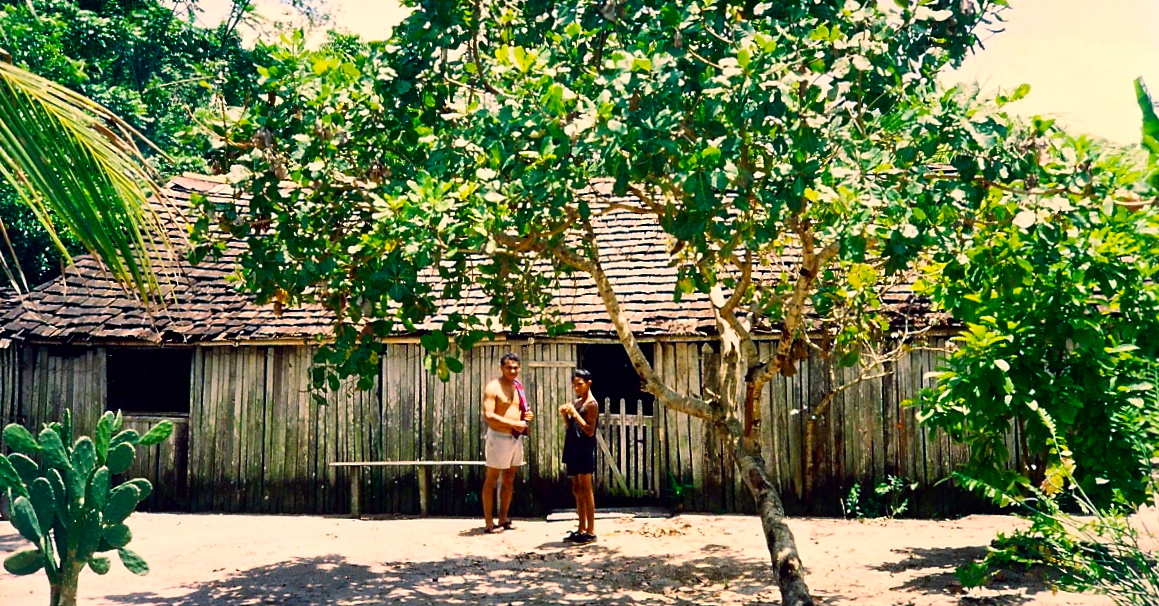
Nego and his little brother outside the family’s house in Moju.  This the final installment of Tamba-Tajá, the story of a trip to rural Amazonia in 1993.  Double-click the photos to see them in original size.

______________________________________________________

We ate our fill at Nego’s uncle’s place.  It was nice, after a long morning of travelling on a hangover.  We had a lot of things to carry, bags of food and drinks, some clothes, and things from the city that Aluízio brought for the people we’d see on the way.  All fed, we started down the path single file, away from the road, the little house, the clearing, and into the woods.  We were carrying a lot, but behind us we left some sacks of food and other things – we’d be back to get them.

The family farm was a couple more kilometers through the woods.  The trees were tall and lush and green.  Leaves littered the forest floor off the path, which began to turn and then turn back again, as if cutting back to go up a steep hill or mountain, only the land was flat.  Flat and densely covered with trees and shrubs.

After a good bit of walking, we came to a creek – igarapé – that had cut a gorge about 6 feet deep and maybe 20 feet across.  It wasn’t terribly deep, but it was enough to slow us down a bit.  Another 20 or 30 minutes and we arrived at the house, which was surrounded by fruit trees of all sorts.  Huge limes hung from one, and we’d use those limes later to bathe in the igarapé behind the house.  The house was shingled on one side, straight boards on another, with windows open to the air and what seemed like a lot of space as we approached.  You could see through the spaces between the boards.  There was no electricity.  The water came from a well drawn by a hand crank, up to a thousand-liter tank 10 meters up atop a scaffold.  PVC piping brought the water down from the tank and into the house.

On the other side of the path, in front of the house, there were fields of manioc and pepper plants.  Pepper was supposed to the salvation of Amazonian smallholders, a marketable crop easy to grow in the climate and soil conditions.  Some folks made money on it, but few were truly saved.

The women settled into the house.   They wiped the dust from the tables and chairs.  They opened the hammocks we would sleep in and hung them from the house’s frame.  They began cooking.  The man who took care of the place while the family was in Belém came round with the horse, and we took the charrette back to the road to fetch sacks of food and other things needed for the next few days.

Cajú

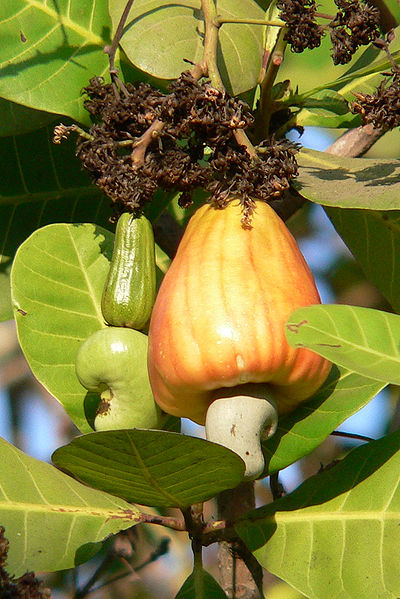
Later, I went off with the men into the forest.  Aluízio wanted to show me his Amazonia.  We brought a bottle of cachaça (ka-SHA-sa), a clear, potent cane liquor, and we walked along pulling cajú from the trees.  The cajú grows as a fruity, pulpy bulb with a nut, the cashew, hanging from its end.  After a slug of cachaça, you suck on the juice from the cajú to dissipate the burning sensation of alcohol on your tongue.  We did this for an hour, stopping from time to time for Aluízio to show me the plants near the ground and explain each one’s medicinal purpose.

After a bit, we reached the virgin rainforest.  The trees were as large around as any I’d ever seen, taking three or four men to encircle a trunk, hand to hand. They grew high in their struggle for sunlight, competing with each other as they threw up ever larger leaves, leaving very little light to filter down to the forest floor, were it was damp and cool.  In the forest, you feel a chill even as you sweat under the leaves.

Vines hung everywhere and swayed with the gentle breeze that ran through the trees.  Bird sounds came from every direction, a dense concert in the round of cackling and crowing, the flapping of wings and stirring of leaves.  Echoing caws of differing pitch and resonance shot through the distance from near and far.  This was the sound of the forest breathing.

We took a twisted path through the woods and then headed back to more settled places.  We stopped to visit neighbors who lived further from the beaten path, in houses of wattled clay daubed onto wood frames made of sapling branches and topped with palm fronds.  The clay dried hard as bricks, but I thought it must take a beating in the rain.

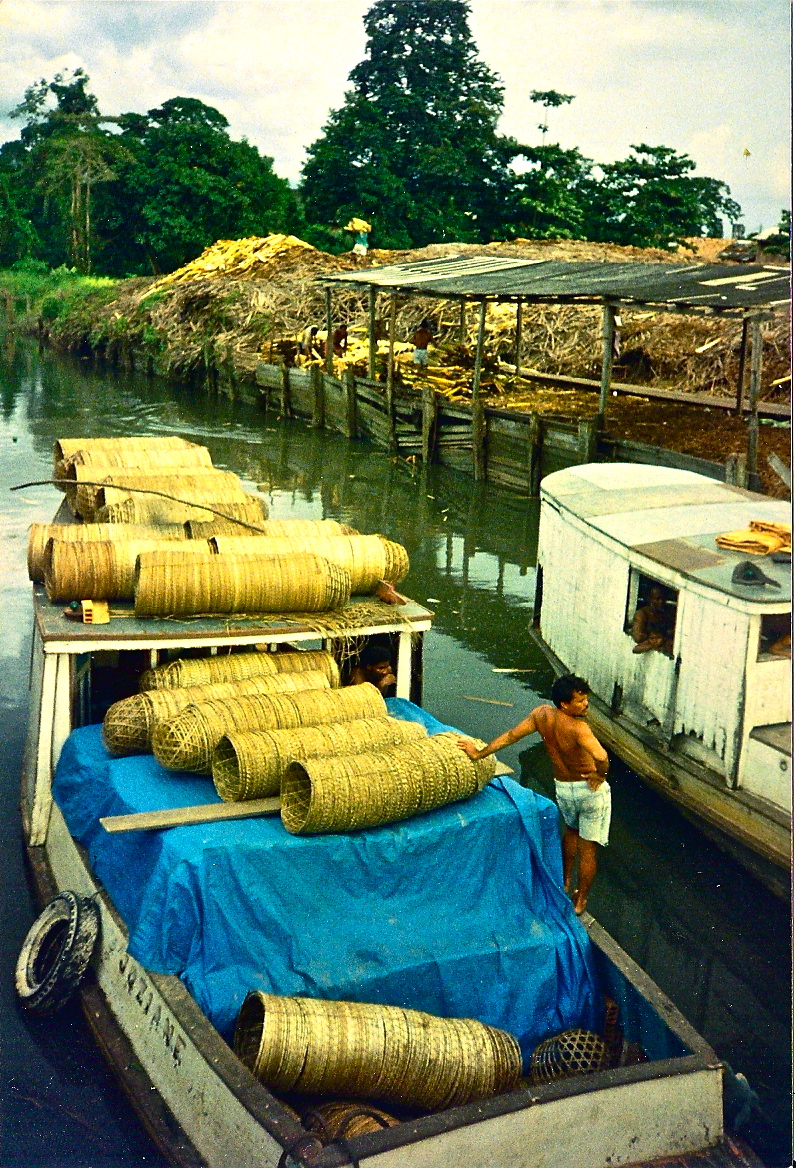
One man was making birdcages from reeds and bamboo, fine little pieces fitted together.  He caught forest birds and sold them to another man, who took the birds in their hand-made cages to Belém, where he sold them to another man, who in turn sold them on the streets of the city to visitors and local people alike.  Of the three men involved, the one in the middle made the most money.

The farmers were talking about the price of pepper and whether or not they’d make any money this year.  Then the conversation turned to the price of lumber, and Aluízio asked one farmer if he was going to cut the madeira nobre – the valuable wood, like mahogany – on his land.  Some of it might wind up going into beautiful headboards and armoires for sale at specialty importers in Chicago.  Some would wind up as yet another wall for yet another room on yet another house in Jurunas.

Back at the farm, darkness began to close in as the women put out the food for dinner.  Beans with chicken and meat, rice, fruit, bread, crackers, coffee and farinha, the raw manioc flour grown right there.  We mixed the farinha into everything. Farinha de manioc isn’t much to speak of in taste or nutrition, but it stretches the food on your plate and lets you “fool the stomach” into thinking you’ve eaten much more than you have.  It tastes good with the beans and brings a crunchy texture to the soupy froth.

By dark, the house was lit with a couple of kerosene lamps not larger than Bunsen burners.  A soft light, it brought out the curves and contrasts in everyone’s faces as we talked about life, the weather, the family.  OOOOOO-go!, the boy’s mother rang out time and again as the he ran about making noise, upsetting things carefully stowed and stacked and, in general, being a boy.  Nego took out his guitar, and we all went outside to sit under the trees and sing.  Nego played.  His brother played.  I played.  We shared our stories and ideas and adventures.

Between songs and laughter, the forest told its own stories as the birds calmed and other noises came.  Nego told of the time he spent a week at the house by himself.  The forest noises scared him so much he would never do it again.  Aluízio told older stories about jaguars and snakes and mythical creatures who came out of the forest at night and are sometimes men in appearance.  Legend had it that the boto, the pink freshwater dolphin found in the Amazon, would turn into a tall white man in a white hat and white suit, showing up at the village dance to sweep a young girl off her feet and take her back to the enchanted city under the river, where the boto made her his queen.

We became tired and went inside.  I crawled into my hammock and pulled up the sheet under a chill.  I listened to the night forest and fell asleep to the sounds of snoring and swaying hammocks.

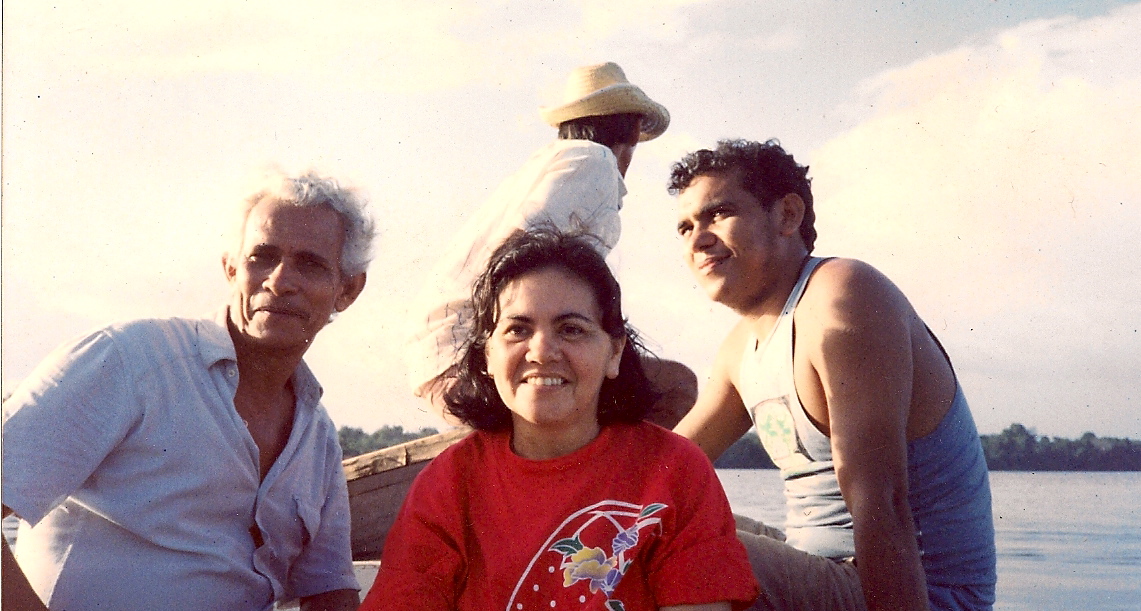
Crossing the Moju River, Aluízio, Dona Maria, and Nego (Augusto)

Notes and Credits

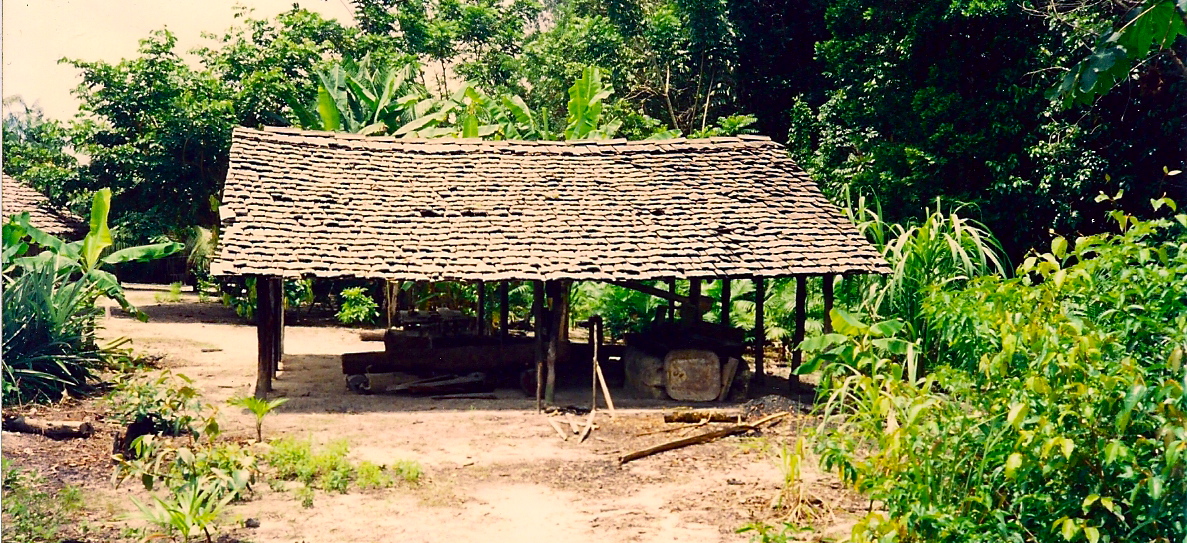
The photos for this installment of Tamba-Tajá are all from my 1993 trips to the farm with Nego, except for the photo of the cajú, which is from Wikipedia Commons.  The Tamba-Tajá closed by 1995.  Nego got married and moved to a small town in the interior of Pará, a town much like Moju, where he became a school teacher – music of course.  The small town life in Amazônia is what suited him, so I imagined he was, and still is, happy there.

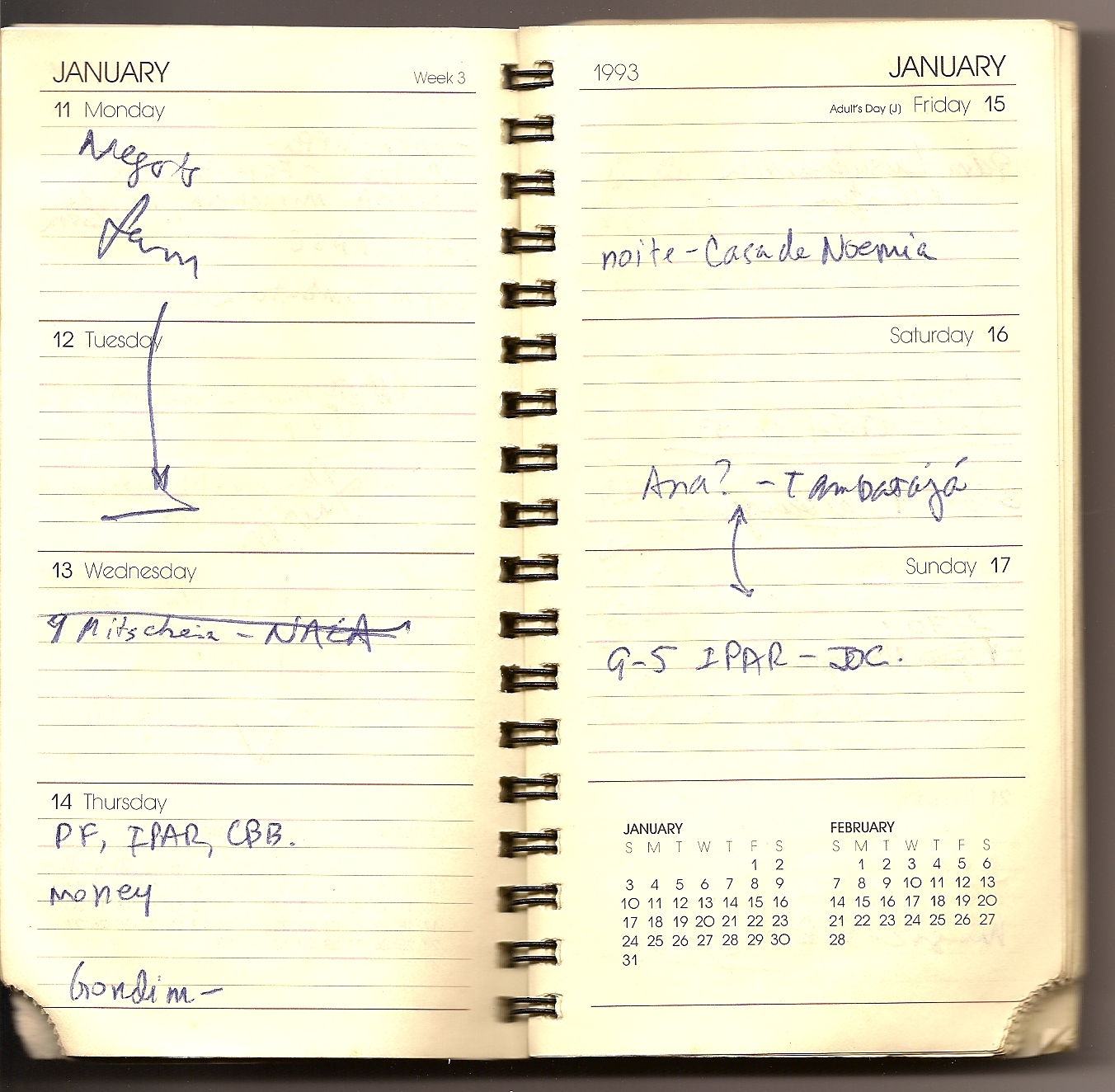
Writing this post has taken me on an interesting journey through my old photos and Brazilian research material, in search of journals and photographs, things to help jog my memory about certain events.  I know I have a journal entry somewhere on this trip, but I can’t find it.  It’s probably on an old 3.5″ floppy disk somewhere in a box under my son’s bed.  I looked through those boxes just now.  Among other things, I found the daily calendar I kept in 1993, showing the dates of the trip recounted in this story:  I arrived at the Tamba-Tajá around 10 p.m. on Friday, January 8 and came back on Tuesday, January 12.  It was the first of a couple more trips, including Holy Week and Easter, April 8-11.  One day I will find the journal entries and figure out how well my memory has recounted these events so many years later.

The land issues encountered by the smallholders who Aluízio talked with in this story are quite difficult.  I deleted a couple paragraphs from an earlier version of the story that got into those issues; they didn’t work for the story I wrote.  But they are real.  The further south you go from Belém, the more dangerous it gets, southern Pará being rife with more land conflict than any other place in Brazil during the 1990s.  Church people and unionists tried to organize the small farmers and ranch hands, but they were constantly harassed by the big farmers and their henchmen, who as often as not were also the local police.

A good up-to-date article on land issues in Amazônia appears here, by Paulo Cabral for the BBC.  The murder of Sr. Dorothy Stang, of the Sisters of Notre Dame de Namur, an international Catholic religious order that works for social justice and human rights, was a major issue in Brazil and internationally.  A lot more could be written and said about these issues, and I’m working on writing something that was inspired by Rosa Marga Rothe and the Book of Daniel.  Coming soon …

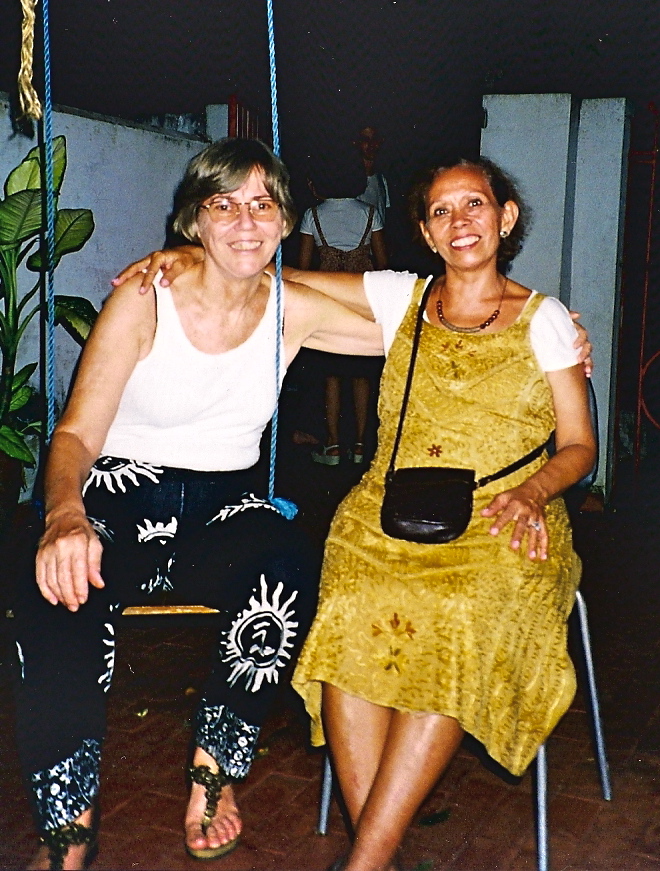
For now, I’d like to leave this story with a photo I took of Rosa Marga and Iza that I took in 1998, not too long before Iza passed away.  They started this story, and so they should end it.

Marga and Iza, Belém 1998

2 Comments

Filed under beauty, brasil, Brazil, danger, food, life, truth

The Park Slope 100

truth and rocket science has been included on this year’s “Park Slope 100,” a list compiled by Louise Crawford on her blog, “Only the Blog Knows Brooklyn.”  Anyone from the neighborhood is familiar with Louise and her work, whether in her Smart Mom column in the weekly Brooklyn Paper, or the Brooklyn Reading Works, or the blog, or many other events.  Obviously, she can’t place herself on the list, but all of us in the nabe know that she makes it that much better for the rest of to do things of value around here.  A heartfelt thanks to Louise!  What an honor to be on a list with favorite blogs like Fucked in Park Slope and Brit in Brooklyn, and writers like Frank McCourt.

Oh, and speaking of the Brooklyn Reading Works . . . truth and rocket science will be curating the April 15, 2010, edition of Brooklyn Reading Works, on “The Truth and Money” . . . of which more later.  Keep tuned.

2 Comments

Filed under ideas, journalism, life, Park Slope, truth

Tamba-Tajá, 2

This post continues the story of my trip to rural Moju in 1993.  Double-click the photos to see them in original size.  One more installment of the story is left…

______________________________________________________

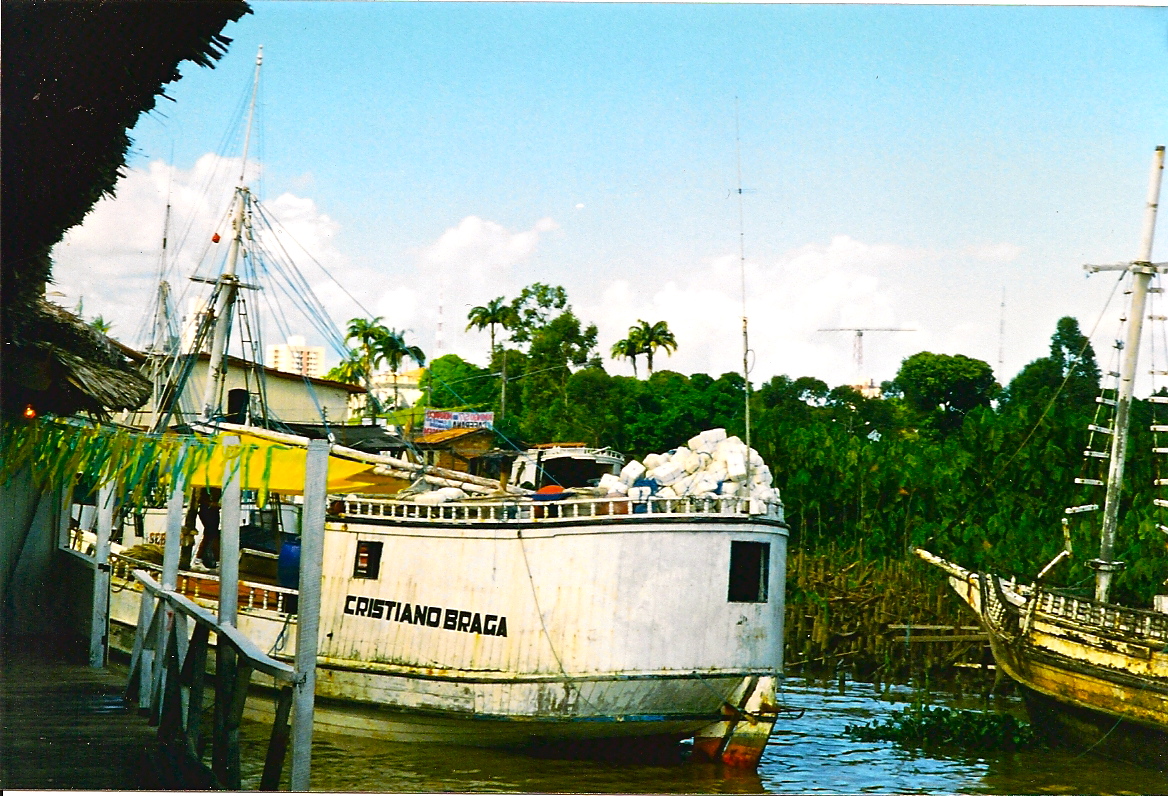
Rosângela was Nego’s aunt, and it turned out he and I knew all the same people, so I went home at 3 in the morning to collect my things and meet him back at the Tamba-Tajá.  I brought my toothbrush, a blank notebook and a couple changes of clothes to last me through Tuesday.  Back at his parents’ house, Nego and I got a couple hours’ semi-drunken sleep before we set off for the docks in Cidade Velha, Belém’s old quarter, from which you can get local boats for just about anywhere in the Amazon.

Everyone laughed at Nego and me in our hangovers.  Aluízio, the patriarch, had seen this before.  Nego’s twin brother ribbed us through our headaches.  Nego’s mom just shook her head, while his sister chased after her 4 year old son, Hugo – her yelps of “ooooo-go!” “ooooo-go!” (in Portuguese the “H” in Hugo is silent) echoing throughout the trip as she tracked after the boy to keep him from falling off the boat, pull him away from knives, or just quiet him for a few minutes so we could rest our ears.  Oscar, Hugo’s dad, hung with Aluízio and Nego’s mom, who made sure I was comfortable and happy as we set off.

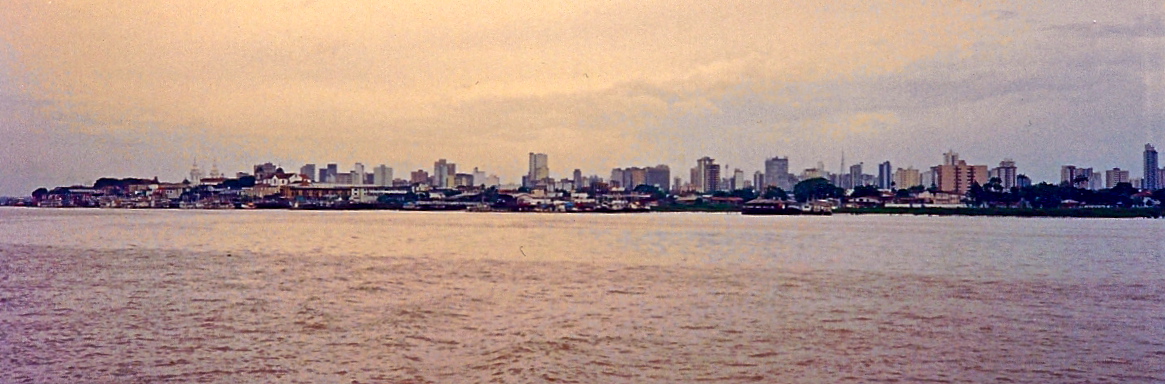
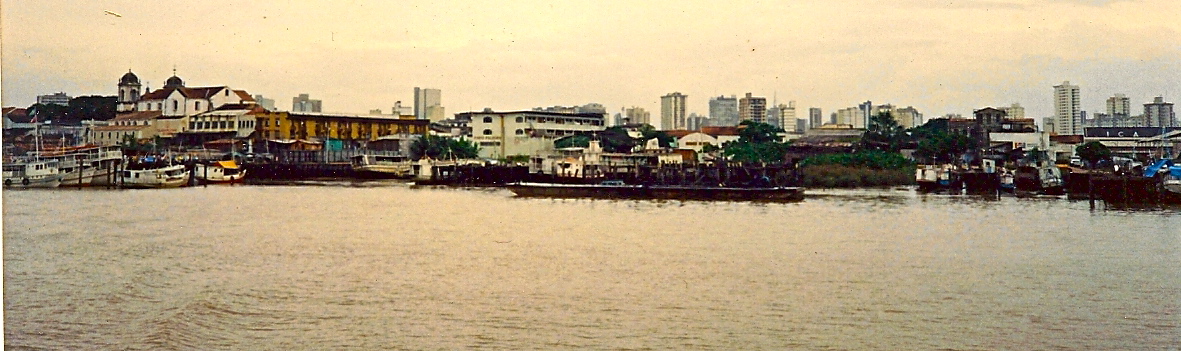
This was my first boat trip in Amazonia, crossing the Baía de Guajurá to the bus stop at Barcarena.  As the boat backed away from the dock, we watched the city recede into a collection of smaller houses and palm trees, behind which rose a massive skyline of highrise apartment buildings.  A lot of women from Jurunas live in those highrise apartments, in the maid’s quarters, next to ironing boards and sewing machines, just off the kitchen.

Belém, from the Baía de Guajurá

It took an hour to cross the bay, where we waited for the bus in a parking lot.  Used to be you went everywhere by boat, Nego told me, and then it took a full 24 hours to get to their little farm in Moju.  With the roads and busses the trip shrunk to about 5 hours, quite an advance from the past.  The bus ride itself was broken into a couple of parts, because you had to cross the Moju River and then change busses in the town.  At the river, everyone got out the bus and ran down to water, where dozens of men and boys waited to ferry people across in small, open, wooden boats, a few cruzeiros for each person.  About 20 minutes later, we were on the other side, in Moju town.

Moju was a typical Amazon river-town – a collection of dusty buildings and streets, a trading post, some government buildings.  In the center of town were the older houses, stuccoed and whitewashed, with Portuguese-blue lintels and trim.  The further you went out from the center, the houses turned to wood and occasionally brick, getting smaller and more rustic.  Nego had some relatives in Moju, one of whom was a political official of some sort.

Marajó 1998

Nego’s own family was from Marajó, the large island in the mouth of the Amazon, to the northwest of Belém.  There, Aluízio had been a mayor in some small town at one time or another.  He was a staunch member of the “PMDB” – Party of the Brazilian Democratic Movement – which was the official opposition party during the military regime in the 1970s and 1980s.  By the 1990s, the PMDB was the official party of the state governor, Jader Barbalho, who rode the opposition wave to wealth and finally condemnation as one of Brazil’s most corrupt politicians.  Aluízio complained that all his children were “petistas” – for the party initials “PT,” the Partido dos Trabalhadores (Workers Party), which was the main left-wing party that had emerged in 79 as a more radical alternative to the Aluízio’s own PMDB.  Nego laughs when Aluízio says these things.

From Moju, we took the road again.  It started out paved and but wound up in the same red clay as the streets of Jurunas.  Thick rainforest alternated with cattle pastures.  Charred stumps poked out the ground amid sparse tufts of long grass that would grow on the land for a couple of years, until the topsoil becomes barren and can support vegetation no more.  All the life in Amazonia is in the trees and bushes, and the soil they sit on is barren.  Charred stumps and lumps of clay.  Loam.  Shrublike bushes.  Not too many cows out there, but it sure was hot.

So we barreled on down the road toward some place I’d never seen.  By early afternoon we stopped and got off the bus in front of a small wooden shack by the side of the road.  A smaller path left the roadside and disappeared into forest behind the house.  A man greeted us and we went inside to eat, have a drink of water, and talk about the latest events in the area.  This man was Nego’s uncle.  He has a small farm next to the road and lived there with his daughter.  Fruit was everywhere, hanging from the trees and on a plate before us.  Mangos, caju, goiaba, pineapple, coconut.  There were rice and beans, chicken.  Good food and a lot of it, for we still had a few kilometers to walk through the forest.

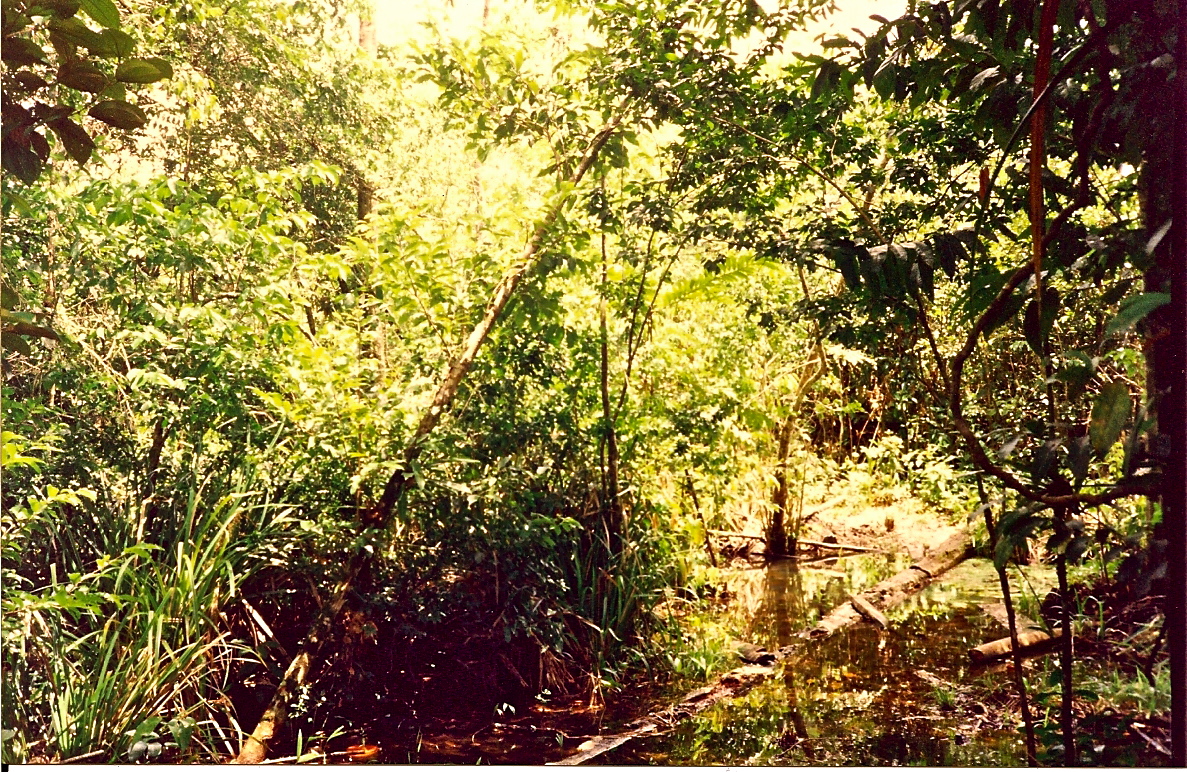
The forest around Moju, 1993

Notes and Credits

The photographs in this posting are all my own, taken on various trips to Belém and environs in the 1990s.

Right now the rainforest and Amazonian issues are stirring up heat at the COP-15 summit, and as someone who has lived a significant portion of my adult life in Belém and has traveled all over Amazônia, I am hoping that some good things might come of this.  The ties between deforestation and cows and greenhouse gasses are tight, though as Brazilian researcher and advocate João Meirelles Filho notes, cows are a bigger problem than Brazil or the Amazon.  I don’t hold out that much hope from politicians, however, but I do find a lot to inspire in guys like Doug, whose Amazon Pilgrim blog recounts his journey across the Amazon, from Belém to Peru, by bicycle.

You can find out more about Doug and his adventures at Green Upgrader, where he’s an editor.

And of course, we can always find inspiration with one of the most popular foreign rock bands in Brasil, or anywhere else, for that matter, outside of their home Germany – and I am speaking of course of The Scorpions, whose concerts in Manaus have been sold out for the good of Greenpeace and the rainforest.  For a different kind of concert in Manaus by foreign travelers, check out “Our Jungle Journey,” a blog by a North American couple who moved to Manaus to play in the symphony orchestra and other music groups there.  They’re enjoying the splendid, world famous Manaus Opera House, one of the true gems of the Amazon’s belle epoque during the rubber boom (1880s through 1920s).

One of the most interesting groups working in Amazonia on building sustainable lifestyles for the forest and the people who live there is IMAZON, Instituto do Homem e Meio-Ambiente da Amazônia (Institute for Man and the Environment in Amazonia), which was founded in the 1980s by a team of Brazilian and North American researchers.  I’ve visited there several times in the 1990s and 2000, and they do great work.

3 Comments

Filed under brasil, Brazil, life, myth, youth

Tamba-Tajá, 1

Santa Maria de Belém do Grão-Pará

I’d been introduced to the Tamba-Tajá by Marga, who was a Lutheran minister, human rights activist, and liberation theologist.  The bar’s owners were her friends, Iza and Rosângela, who were related by marriage.  Iza had been a revolutionary and women’s rights activist in Brazil for many years, including the worst years of the military dictatorship in the 1960s and 1970s.  Rosângela was raising her children and grandchildren while selling apartment leases in Belém and generally dabbling in real estate.

They named their bar for a plant of local legend, called Tamba-Tajá by Amazonian natives, known as the Elephant Ear plant to others, which people grew in their yards.  The Tamba-Tajá can tell if there is much love in the house, very little, or if one of the spouses is cheating.  A friend of mine in Belém made a point of telling me that a smart woman always plants one in her yard.

The bar called Tamba-Tajá was a family affair in the working class neighborhood of Jurunas.  In January, during the height of the rainy season, the streets of Jurunas are deep with a mud of dark, red clay which can also be home to ferocious tribes of fire ants out in the countryside. People debate which is better, the mud during rainfall or the fine red dust kicked into the air when the streets are dry.  The dust gets in your nostrils and mouth, leaving the taste of clay on your tongue.  They say the dust causes the “gripe,” colds and fevers everyone lives with and no one likes.

A street in Jurunas, 1993

The Tamba-Tajá opened right on to the unpaved street.  It was in the bottom floor of the house where Iza’s estranged and still quite revolutionary husband lived.  He was a poet of some local fame.  The bar was completely open to the outside, inside and outside having little meaning in a place where inside is often outside, defined less by bricks or wood than by the way people inhabit those spaces.  In the front, palm trees shade the patio and keep the rain off people as they eat and dance and drink.

The windows are open to the outside air, too, as there are no screens in Belém, except on Marga’s house, perhaps because she was descended from Germans.  In the streets and through the windows of the Tamba-Tajá you can see dark silhouettes of palm trees swaying in the breeze over Jurunas and its little, wooden houses, home to too many people with too little money, though they always seem to have enough to stop by the Tamba-Tajá and the other housefront bars in the neighborhood on a Friday night. Cold beer beats the heat in Belém.

There’s a group of reggae musicians who hang out at the Tamba-Tajá, along with political dreamers and the friends and family of Iza and Rosângela.  These musicians spin records on some nights and everyone dances.  The sweat soaks your body as you twist and find a place in the scratchy rhythms booming from the old, battered speakers Ivan dragged to the bar on the back of his bicycle. Over crackling, jerry-rigged wires and pounding drums, Bob Marley lived for a while at the Tamba-Tajá.

The first time I went there was to meet Marga and celebrate Iza’s birthday.  They had me play for them.  The stereo wires were re-rigged to a microphone that had seen much better days many years ago, and they gave me a guitar that made the microphone look like a piece of new equipment.  I didn’t know any Brazilian songs, but that’s not what they wanted to hear from me.  “Let It Be” always brings down the house in Brazil.  And it did again, that night at the Tamba-Tajá.

Rua Tupinambás

Now Iza’s birthday had passed, and it was a Friday night.  I hadn’t been over to Tamba-Tajá for a while, and with no plans to speak of I headed for Jurunas, a slow walk about 10 blocks down Rua Tupinambás, like “Jurunas” the name of one of Brazil’s original, native peoples.

It had been a long day for me, with much work to do, and the rain storms were particularly hard.  In Belém, the blue skies of morning typically give way to clouds and showers by mid-afternoon.  From January to May the rain can start in the afternoon and not stop til near daylight.  It washes the city and cleanses its ills and keeps the equatorial sun from burning everyone and everything to a crisp.  In all, about 86 inches of rain falls in Belém each year, a little over 7 feet.

The rain leaves the air smelling fresh with the breeze off the giant Guarajá Bay, which brings the ocean to into the mouths of the three rivers that surround Belém:  the Amazon, Toncantins and Guamá.  The ocean tides are sometimes so strong that they send waves up the rivers, so that they seem to flow backwards for a while.  Pororoca, they call it.  All this water gives life to the land and its people.

As I walked down Tupinambás, I looked to the sky for signs of rain, letting my eyes graze the cloud bottoms and measure how far or close they might be.  The city lights bounced back from the clouds, and the clouds glowed orange in the distance, a false sunset that lasts all night long until the clouds dissipate in the coolness of dawn and the new day.

Tonight at the Tamba-Tajá there was no one I knew, save for Rosângela.  I greeted her, got a frosty Kaiser, and sat down at a table of strangers, just listening to the conversation.  A man was speaking to a boy.  The man held his right arm across his chest.  He held his right arm with his left hand, as he would the neck of a guitar.  The boy did the same.

So we began to speak about music.  The man called himself “Nego,” which is a common nickname meaning “black dude.”  The boy I recognized from reggae nights at the Tamba-Tajá.  He had wide, brown eyes that spoke of youth.  Nego had curly black hair thick atop his head, a round face and full lips like my own. His smile and manner drew me in.  He asked me questions, about music, my life, why I was sitting in the Tamba-Tajá and what I was doing.  We talked for a long time, over a few more Kaisers.  The others round us had their own conversations, and we had ours.

Nego wanted to know if I’d ever been out of the city to see the forest.  I hadn’t.  He asked me if I’d like to go with his family to a farm they have in the middle of the forest, a day away from Belém in Moju.  I said, “sure, Id love that.”

“We’ll leave in a couple hours,” he said.

Notes and Credits

This story, Tamba-Tajá, will be told in 3 parts on truth and rocket science.  It recounts a visit I took to the bar on a Friday night in 1993, during my year of doctoral research on Belém.  There I met a young man who became a close friend for most of 1993, and he invited me out to his family’s farm in the rainforest.  I returned home on Tuesday.

I took the photo of Belém’s docks in the “Cidade Velha” in April 1993, as the boat left Belém for the journey that is recounted in this story.  “Cidade Velha” means “old city” and refers to the original colonial settlement of Belém that was established in 1616 to consolidate Portugal’s claims over the Amazon.  The other photos of Jurunas were taken around the same time by me, except for the photo of Rua Tupinambas.  That photo comes form the site Skyscraper City, which contains a great number of photos of Belem.  Very nice collection!

For more on my friend, Rosa Marga Rothe, see her Wikipedia page.  Her daughter, Iva Rothe, is a accomplished musician.

The picture of the Tamba-Tajá plant in the text is from the website, “Pasarela Cultural,” which goes on to discuss the legend of the Tamba-Tajá.

The legend of the Tamba-Tajá can be found all over the Web.  Silvana Nunes’s fotolog has a great photo of the plant and a simple text of the myth, which I have translated.  Nunes, a teacher and photographer, has another blog called “Foi desse jeito que eu ouvi dizer…” (this is how I heard it…).

In the Macuxi tribe there was a very strong and intelligent Indian.  One day, he fell in love with a beautiful Indian woman from his village.  They were married a little later, and they were very happy, until one day the woman became very ill and was paralyzed.

So that he wouldn’t be separated from his love, the Macuxi man made a sling to carry the woman on his back, taking her everywhere he went.  One day, however, the man noticed that his cargo was heavier than normal.  When he untied the sling, he found that his beloved wife was dead.

The man went into the forest and dug a hole on the edge of a creek.  He buried himself together with his wife, for there was no reason for him to continue living.  Some time passed until a full moon appeared in the same place where they were buried, and a gracious plant unknown to the Macuxis began to grow there.

The plant was the Tamba-Tajá, with dark green triangular leaves, which have on their backside another, smaller leaf which appears similar to the female gentialia.  Together, the two leaves symbolize the great love that the Macuxi couple had.

Amazonian caboclos grow the plant near their houses and attribute mystical powers to it.  If, for example, the plant grows well with exuberant, lush leaves, it’s a sign that there is much love in that house.  But if the larger leaves don’t have the smaller ones on their backs, there is no love in the house.  If there is more than one smaller leaf on the backside of the larger one, one of the spouses if unfaithful.

The photo of the Tamba-Tajá plant in the story’s text shows the “small leaf” or flower on the backside of the Elephant Ear quite well.  Without that flower, love ain’t going right in the house.

8 Comments

Filed under brasil, Brazil, life, myth, truth, youth

From Life on Mars to Linden, addendum

In the last few weeks, the post “The truth and change, 3a:  From Life On Mars to Linden” has been getting a lot of hits.  Its spike in the data has pushed it to the most-hit post of all time for me, past the old standards of “The truth and us” and “The truth and unicorns, parts 1 and 2.”  I am really interested to know how and why this spike is occuring from those visiting.  Feel free to email me (jguidryDOT7ATgmailDOTcom) or Twitter (@truthandrockets) or leave a comment here.

I started to put this addendum together right after fininshing the Life on Mars post a few months ago.  I had uncovered so much interesting stuff and, as it always happens, realized how much I had missed once I had published the posting.  In spite of all my good intentions, I let the addendum lay in the to-do tray whilst writing up other things of interest to me.  I continue to be fascinated by the way that virtual spaces and so-called “real life” affirm each other’s essential meaning in our world.  I’ve also begun to write a longish story about organic/avatar relationships and welcome any interesting comments or links from people about their own stories or interests in the phenomenon.  So here are some fun things . . .

The Arch is a blog about design and architecture in Second Life that goes into great detail on the kinds of Houses of Tomorrow that can exist today in the virtual world.  They’ve posted a great short video on YouTube, and if you follow the “related videos” you can drop into a whole new world virtual vouyerism.  Enjoy!

Elle Kirshner’s Second Spaces is an interior design blog that highlights the newest designs for your home in SL.  Elle is a designer herself, and by just clicking through her site you can see a lot of the interesting concepts and designs about space that are important to virtual life.  From Second Speaces, you can also link to Elle’s friends and other businesses, learning a lot about SL’s economic and social life.

One of the interesting and most wonderful consequences of my original post “From Life on Mars to Linden” was that I picked up a new Twitter follower (and presumably blog reader):  Botgirl.  Botgirl’s Tweets (@botgirlq) are a veritable library of hyper-current thinking on storytelling that have become a great source for me as I write and think.  Should you Tweet and link through Botgirl’s world, you’ll realize that this Avatar and her RL typist brings into focus a whole world of multiple and parallel ontologies that really do get at (what I see as) the really important things about life.  If you’re a storyteller then you need to become friends with Botgirl.

Virtual existence brings into high relief the way in which storytelling truly becomes part and parcel of being.  Call it an auto-ontological environment, in you will, in which stories become magically real.  Lanna Beresford’s blog “Avatars in Wonderland” takes up these themes and helps us see how to live on these parallel planes.  In “All the virtual world’s a stage” she interviews role-player Salvatore Otoro.

Finally, the interest in the economics of virtual worlds is something I find truly captivating, not so much from the standpoint of getting into biz myself but rather from the perspective of learning how we create value.  Intrinsically, there is no value in nature, and then we come along and begin to create value.  Sometimes we create value out of scarcity, sometimes out of thin air.  Eventually, it always comes to scarcity and control, however.  With the Virtual Economy Research Network, you can keep up with a group of people doing some pretty serious study of virtual economics.

There’s much more to see.  Much more to look at.  Many more stories to create.  We’ll keep writing . . .

3 Comments

Filed under ideas, life, media