Truth and Rocket Science – guest stenographer

Photograph courtesy of  Visual Stenographers: Atiba T. Edwards + Emma Raynor

The Scoop

Photographs from Truth and Rocket Science—some already published on this site and some from my archives—are now being featured on the blog “Visual Stenographers,” which is published by Atiba Edwards and Emma Raynor.  The photo above is one of theirs.  The blog is a delightful visual tour as much through the world as the minds of their photographers, and TRS is honored to be invited.  My photos will run for about two weeks, give or take, along with any others they are posting.  Do visit the site and while you are there, enjoy the archives.

The Stoop

This came about as a result as my involvement in the Brooklyn Blogfest, which I had been advertising along the sidebar of TRS (and still am even though it’s over).  The Fifth Annual Brooklyn Blogfest took place on June 8, 2010, at the Brooklyn Lyceum.  Absolut sponsored this year’s event as part of the launch of its limited edition “Absolut Brooklyn,” which they created in collaboration with Spike Lee, who spoke at the event.  It’s vodka with “an invigorating blend of red apple and ginger replete in a specially-designed bottle reminiscent of the ubiquitous ‘Brooklyn Stoop Life’.”  Okey dokey.

For the Blogfest itself, TRS was the “panel wrangler,” responsible for helping to ensure that the panelists would show up and do their thing.  The panelists this year were:

Faye Penn of Brokelyn

Jake Dobkin of Gothamist

Heather Johnston of So Good:  Food and Wine with Heather Johnston

Petra Simister of Bed Stuy Blog

Atiba Edwards of Visual Stenographers

The panel was moderated by Andrea Bernstein of WNYC.  A theme (among many) for the evening was Brooklyn’s capacity for conversation and discourse and the possibilty that blogs could take the dynamic of good old-fashioned stoop conversations and amplify, broadcast, hone, and narrowcast them across both time and space, in Brooklyn and beyond.

The Day After

Apparently, there has been some controversy in part of the blogging community here (i.e. Brooklyn) about Absolut’s sponsorship, provoking a bit of righteous ire across these stoops.  Heather, one of the panelists wound up having an extended exchange on Atlantic Yards Report, and another Brooklyn blog, Brownstoner, claimed the Blogfest had “sold out.”  As one who has been a community organizer in different places around the country and was happy to help with the Blogfest, I could run on with platitudes about getting up and doing something, and maybe this time Louise, Blogfest’s organizer, was trying something new, and so on and on and on.

Righteousness is like certain kinds of spicy foods that were wonderful in youth yet with age tend to bring on a bad feeling in the stomach and thereafter when consumed prodigiously.  Righteousness has its place, of course, but at this point in my life I rather like the way Heather Johnston put it, “I like Louise and what she does.”  Of course there was controversy, but there was also a really great event and some momentum for the future.  Perfect?  What is? It’s like they always say, If a tree falls in the forest …

Stomping Grounds and Old Haunts

So that is how I met Atiba, who shares with me not only the stomping grounds of good ole Brooklyn, but also the University of Michigan, as is obvious from the photograph of VS’s creators taken in front of the Graduate Library on the campus in Ann Arbor, our old haunt (and we have the paper to prove it).  At the Blogfest, Atiba suggested I send some photographs over to VS and here we are.  A very good idea.

Thanks

At the end of the day, thanks goes out to Louise Crawford, the force behind the Brooklyn Blogfest and keeper of Only the Blog Knows Brooklyn.  Louise’s dedication helps bloggers and writers of all stripes to become a community in spaces real and virtual, keeping both honest and focused on talking to each other.  Louise has been a cherished mentor and supporter of my own blogging, and I try to repay her with thanks in action, whether panel wrangling or curating sessions for another of her community-building projects, Brooklyn Reading Works, for which I organized “The Truth and Money” last April.  TRS will be curating another Brooklyn Reading Works event in January 2011 – The Truth and Oral History: The Double Life of the Interview.  Stay tuned …

art is … what unites us!

In the meantime, please enjoy all the photographs on Visual Stenographers and stop over for a look at Atiba’s other projects.  Check out FOKUS, an organization Atiba helped to found that uses “the arts as a tool for education, entertainment and empowerment.”  FOKUS publishes Insight, a quarterly magazine of interviews, articles, photography, poetry, and more.  Atiba’s work merges old fashioned community organizing and the technologies of our time to take community-building to a new level, both in scale and in accessibility.  As the FOKUS website puts it, “art is … what unites us.”

4 Comments

Filed under art, ideas, journalism, media, Park Slope, politics, truth

E/F – The glass (or cup, as it were) of coffee

Thomas Pynchon once imagined a conversation between Mason and Dixon (of the “line” fame, not the knitters, or the pollsters) that is as true in the twenty-first century as it must have been in the eighteenth.  Mason asked Dixon,

How is it … that of each Pot of Coffee, only the first Cup is ever worth drinking,— and that, by the time I get to it, someone else has already drunk it?”  To which Dixon answered that it’s because of “Coffee’s Sacramental nature, the Sacrament being Penance … whereby the remainder of the Pot, often dozens of cups deep, represents the Price for enjoying that first perfect Cup.”

Coffee is the original smart drug, but like all things good, it comes with a price. The key is to be mindful of how much you drink, for the beneficial effects advance only to a certain level, after which having more coffee produces something like a living nightmare of half-truths, unfinished thoughts, and incomplete sentences.

For these and other reasons, people have blamed coffee for the Enlightenment and related revolutions in rocket science and politics.  They all got started in coffee houses, perfect sites for the blending of conversation and caffeine, the ultimate result of which being a heightened desire for self-expression without, however, a commensurate acuity thereof.  Or as Pynchon put it when describing the scene as Mason and Dixon slipped into a coffee house in Philadelphia in the late 1700’s—

With its own fuliginous Weather, at once public and private, created of smoke billowing from Pipes, Hearthes, and Stoves, the Room would provide an extraordinary sight, were any able to see, in this Combination, peculiar and precise, of unceasing Talk and low Visibility, that makes Riot’s indoor Sister, Conspiracy, not only possible, but resultful as well.  One may be inches from a neighbor, yet both blurr’d past recognizing,— thus may Advice grow reckless and Prophecy extreme, given the astonishing volume of words moving about in here, not only aloud but upon Paper as well …

Coffee sounds a lot like alcohol.  Coffee houses and barrooms once upon a time shared the combination of low lights and incessant smoking that leads two or more people to make very bad decisions based on what little they can see or understand of each other, half-remembered bliss and release lifting like a fog with the clarity of morning.  The poor judgment brought on by low-lit coffee conversations that once resulted in revolutionary dreams, however, now leads mainly to snark and graduate theses.  Compared to alcohol, it’s more difficult to appreciate the terrible results of coffee, because they are so often taken for success.

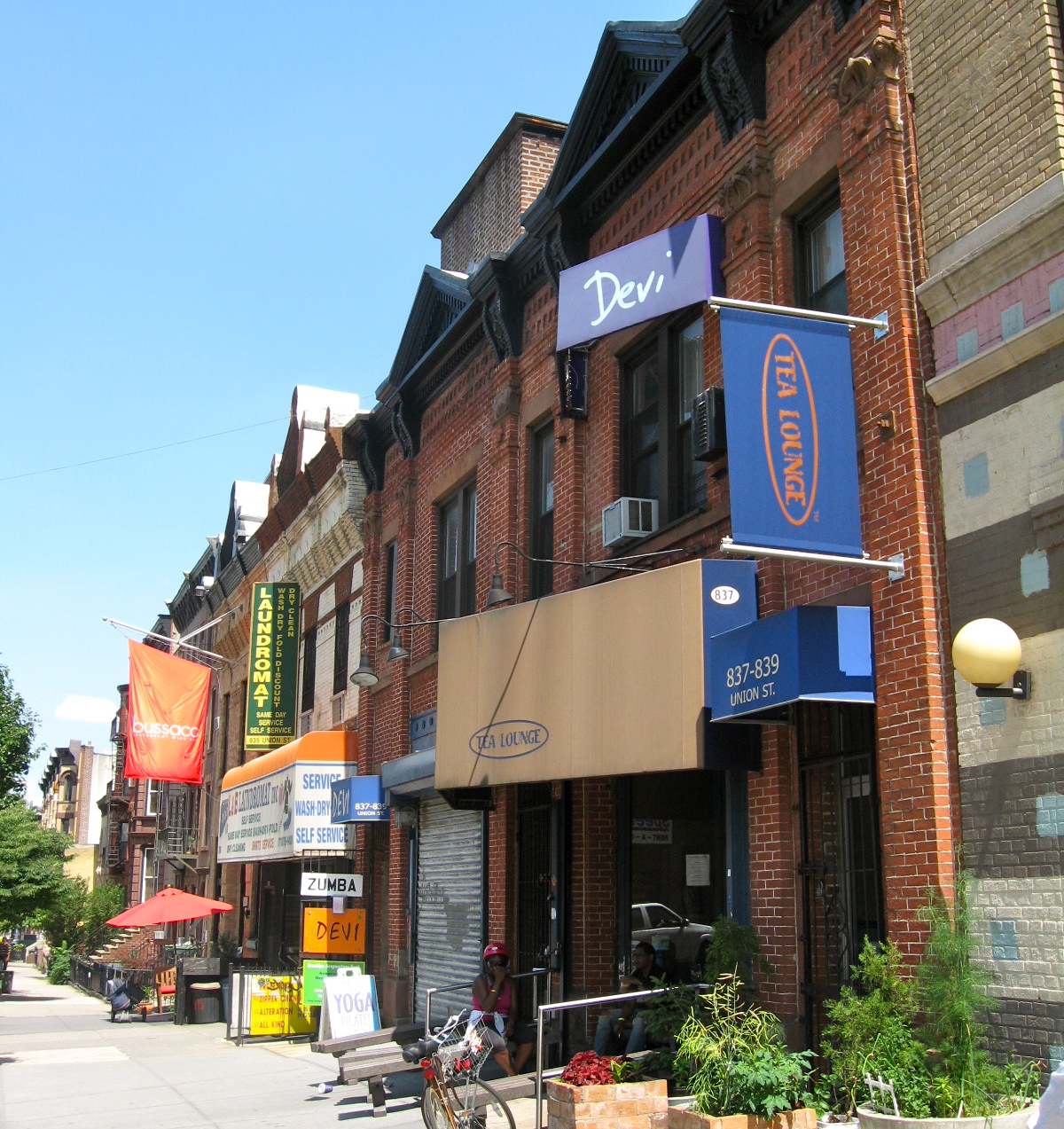
The Tea Lounge, Park Slope, Brooklyn: a revolution is being plotted right here, right now.

People often combine alcohol and coffee, as if the effects of one can cancel out the other.  This is a mistake.  When you drink coffee while already drunk, you don’t become sober.  Instead, you achieve a much more keen awareness of how incoherent you are.  It’s called coffee-boarding and is outlawed by several international accords signed by everyone but the United States.

The relationship of coffee and alcohol to the truth is easily demonstrated by the degree to which various world religions have grappled with either or both.  Islam banned alcohol, and Muslims became coffee addicts, as did fundamentalist Christians though their coffee is not nearly as good.  AA meetings would be intolerable without coffee.  The Mormons banned both coffee and alcohol, which is why they wound up in Utah, though somehow Coca-Cola escaped the ban despite its (post-cocaine) base in coffee’s essential force, caffeine.  The Buddhists call for people to avoid intoxication by alcohol or stimulants, but they don’t make it inflexible.  This sounds like a pretty good idea, except that it’s impossible, which is the point.

The Tea Lounge, Park Slope

repurposing an old garage, the Park Slope way

The photos for this post were taken in the Tea Lounge, a venerable institution in Brooklyn’s Park Slope, the neighborhood that everyone (else) in New York loves to hate, according to the local newspaper.

The original shop was located in the South Slope on 7th Avenue but had to close a while back due to increasing rents, leaving the larger Union Street shop (pictured here) as the flagship in the heart of the neighborhood.  (Another Tea Lounge has opened in Cobble Hill, a couple nabes over on the other side of the Gowanus Canal.)

Every morning, it begins to fill up with freelancers of every type imaginable – writers, designers, editors, bloggers, people looking for jobs – who stay there all day sipping coffee and making the American economy what it is (hey, they’re telecommuting).  One morning a week (which one has rotated over time) the place fills up with mommies and nannies and toddlers when Lloyd comes to sing for the kids.  Those of us who’re working (including the staff) double down, shut our ears, and keep on working.  The place features in Amy Sohn’s satirical send-up of (and not-entirely-ironic homage to) Park Slope mommyhood, Prospect Park West, as the “Teat Lounge,” so-called for the ubiquitous nursing of infants that goes on there to the soundtracks of Neil Young, Rolling Stones, Joni Mitchell, and the occasional contemporary indie-groove (think Jem).

A review by Elizabeth of the Anti Tourist describes the Tea Lounge like this:

Studious laptop users sat beside romancing couples and chatty friends and I have to say, between licking the whipped frosting off of my OREO cupcake and sipping a glass of Riesling, I was immediately at ease–especially when my friend bought me a second glass. So yes. Conclusively, I like Tea Lounge. Is it a perfect place to work? Eh. Maybe not. Is it a good place for a date or a drink with a friend? Definitely.

Notes and Credits

All photographs by the author.

Thomas Pynchon on coffee in Mason and Dixon (New York:  Henry Holt, 1997) page 467 for the first quotation and 305 for the second. It’s an historical novel that follows the eighteenth century British astronomers Charles Mason and Jeremiah Dixon throughout their lives, from their early collaborations in England and South Africa through their pioneering work to survey the border between the Pennsylvania and Maryland colonies from 1763 to 1768.  As novels go, it’s a wonderfully comic buddy film with a touching ending that reaches deep into the emotions surrounding friendship and fatherhood.

Stephen Johnson in The Invention of Air:  A Story of Science, Faith, Revolution, and the Birth of America (New York:  Riverhead Books, 2008) provides rollicking imagery of the confluence of coffee, truth, alcohol, rocket science, tobacco, and the Enlightenment.  The thesis is simple:  replacing beer with coffee as a way to avoid bad water propelled the Enlightenment foward with clear thinking at long last.  Of the London Coffee House, the meeting place of Benjamin Franklin, Joseph Priestly, and other men of science and revolution, Johnson wrote (p. 17)—

The London Coffee House lay in St. Paul’s churchyard, a crowded urban space steps from the cathedral, bustling with divinity students, booksellers, and instrument makers.  The proximity to the divine hadn’t stopped the coffeehouse from becoming a gathering place for some of London’s most celebrated heretics, who may well have been drawn to the location for the sheer thrill exploring the limits of religious orthodoxy within shouting distance of England’s most formidable shrine.  On alternating Thursdays, a gang of freethinkers – eventually dubbed “The Club of Honest Whigs” by one of its founding members, Benjamin Franklin – met at the coffeehouse, embarking each fortnight on a long, rambling session that has no exact equivalent in modern scientific culture.

It no doubt would be interesting for Mr. Johnson to survey the clientele at the Tea Lounge and find out what revolutions are brewing for the near future here.

7 Comments

Filed under fiction, freedom, ideas, individuality, life, Park Slope, philosophy, politics, revolution, struggle, truth

The truth and diamonds

The truth is precious.  So are diamonds.

Both can shine brilliantly, sparkling in the light to dazzle your eyes, making young couples blush with happiness and pride.  Like the truth, diamonds aren’t nearly as rare as their market value would indicate.  Both can be found with ease when you know where to look.  Every once in a while, someone stumbles on a massive diamond in the plain light of day, just one more rock in the landscape until a chance encounter sets it apart. No small amount of truth is discovered in the same way.  What sets these discoverers apart from the rest of us is as often as not luck.

The truth and diamonds leave two trails, one of bliss and hope, the other of blood and cruelty.  More banal than ironic, this is the way of the universe.  The same truth that turns a God of peace into a God of war also turns simple assumptions about fairness into human rights.

What happens when beauty and ugliness form a bond so tight that they become inseparable?  The trouble with the truth and diamonds is that they can lead you anywhere.  What really matters is where you want to go.

Notes and Credits

The opening photograph of the Hope Diamond is by Chip Clark, who passed away on June 12, 2010, away after 35 years as a photographer for the Smithsonian National Museum of Natural History in Washington.  Mr. Clark’s beautiful photographs of gems, animals, birds, and other things can be found all over the web.

The Hope Diamond is surrounded by legend.  It seems that most who have possessed it have come to tragic ends.  It is currently owned by the United States of America and is on display at the Smithsonian.

The playing cards were photographed by the author, from a miniature travel deck for Patience (Solitaire) given to me in 1992 by Professor Raymond Grew, a mentor of mine in graduate school at the University of Michigan.

It should be noted that the truth also grows more precious with time, the simple truths of youth seeming to appear ever more complex and enduring as time goes along, much like the songs of Neil Diamond and just about everything touched by Johnny Cash.

8 Comments

Filed under beauty, danger, death, freedom, hubris, ideas, love, money, philosophy, revolution, riches, truth, war

The truth and fearlessness

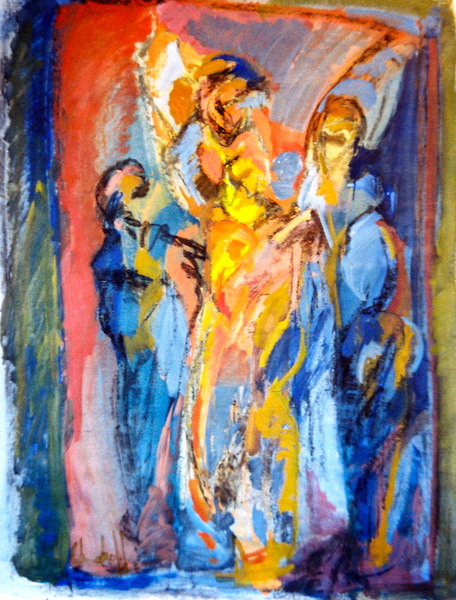
Macha Chmakoff, Daniel et l'ange dans la fosse

My God has sent his angel and closed the lions’ mouths so that they have not hurt me.

Daniel 6:23

Of those who are fearless, there two kinds:  the reckless and the serene.

The reckless attract more followers, for they are dashing and dramatic.  Yet that which is dramatic is also sloppy and careless.  The reckless laugh in the face of danger, but only because doing anything else would seem lifeless and limp.  The reckless cannot appreciate the little things, nor can they understand the subtle, warm moments in between danger, fear, excitement and ecstasy.  They see and feel only in extremes and abandon all judgment in between.  They search out life at the margins where few dare to go or dwell and in this they seem like heroes, but they are not.  Heroes can understand triumph in sadness, and they always know where they are.  The reckless, by comparison, are lost.

I—I can remember
Standing, by the wall
And the guns, shot above our heads
And we kissed, as though nothing could fall
And the shame, was on the other side
Oh we can beat them, for ever and ever
Then we could be heroes, just for one day

David Bowie, “Heroes” (1977)

Fearless Heroes

The serene can be heroes.  They know where they are and what they want.  They are motivated by the desire to do the right thing, and they do so regardless of the odds of success or failure.  They are not reckless because they endanger no one but themselves.  They accept the risk even as they try to minimize it because they are as simply human as the rest of us and they do fear death and pain and suffering.

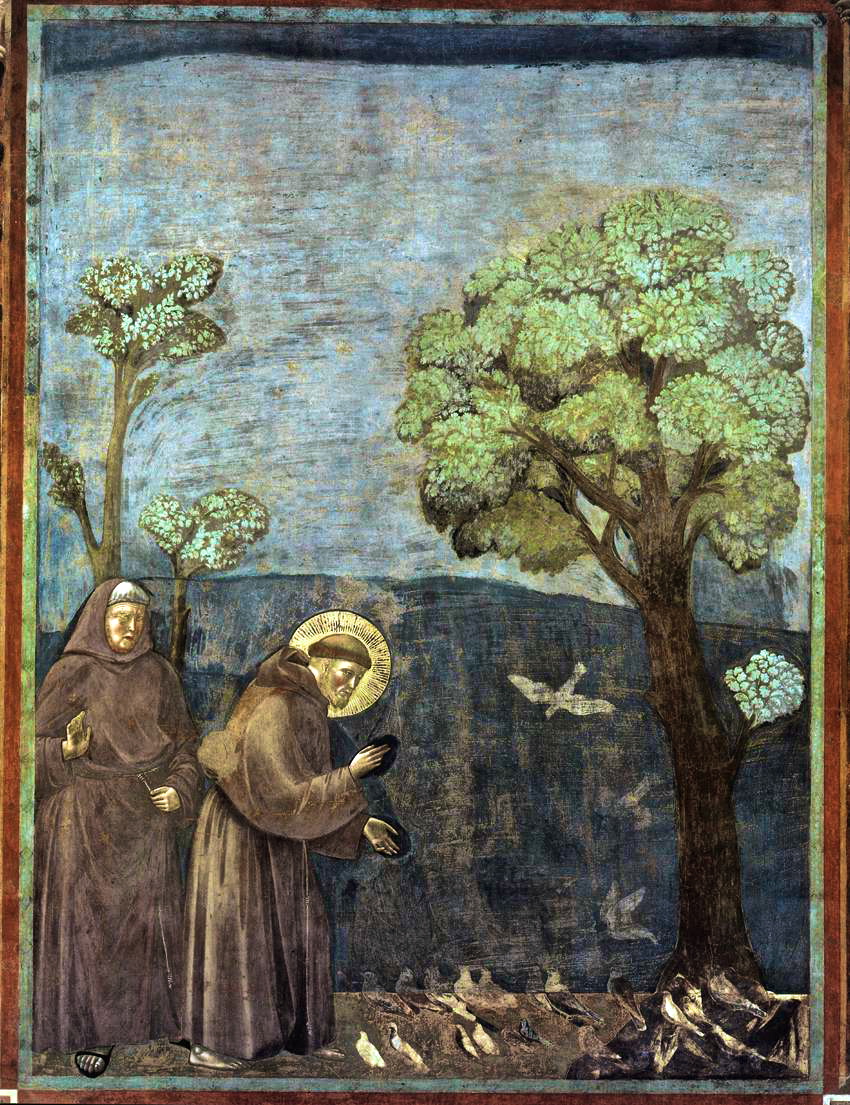
Giotto, St. Francis Preaching to the Birds

Heroes who are fearless and serene become vessels for a love larger than they are.  They seek nothing from their actions but to be made even more whole in the act of giving to another.  St. Francis of Assisi—once a street brawler, solider, and libertine—found his calling in service to the poor and in love for the animals.  He became the friend of all those in harm’s way, the trampled upon, oppressed, and marginal.   The prayer of St. Francis puts all of this in simple verse.  We used to sing it in church when I was a child.

Lord, make me an instrument of your peace
where there is hatred, let me sow love
where there is injury, pardon
where there is doubt, faith
where there is despair, hope

where there is darkness, light
where there is sadness, joy.

O Master, grant that I may never seek
so much to be consoled as to console
to be understood, as to understand
to be loved, as to love
for it is in giving that we receive
it is in pardoning that we are pardoned
and it is in dying that we are born to Eternal Life.

Amen.

Modern Heroes

Padre Bruno Secchi and Pastora Rosa Marga Rothe—he a Catholic priest and she a Lutheran Minister—are both human rights workers in Brazil. I met them in 1992, as I was beginning fieldwork for research on social movements and politics.

Padre Bruno came to Brazil in 1964 and in 1970 founded the República of Emaús, a ministry with street children.  Emaús has just celebrated its 40th anniversary and is still going strong.  Padre Bruno’s work is dedicated to creating the space and opportunity for street children to grow into productive, happy people.  It is humble work, dedicated not to changing these children but to allowing them to find their potential and calling in life.  Emaús in Belem was a part of the worldwide movement that eventually resulted in the UN’s Convention on the Rights of the Child, which was ratified in 1989.  The CRC is a milestone on the path to a better world, appointing the rights of the child in the world we would like to have, not the world we know right now.

Rosa Marga I have written about already, in the Tamba-Tajá stories.  She teaches and practices liberation theology, the interpretation of Jesus’s life and works as a message of liberation for the oppressed and marginalized of the world.  She has been a leader in the women’s movement in Brazil and Belém.  From 1997 to 2005, she was the Ombudswoman for the State Police in Pará, responsible for representing and investigating claims against corruption, brutality, or human rights violations by the police.  In this position, she received international recognition.  She and her family took me in as a friend.  There is always much joy in her house.

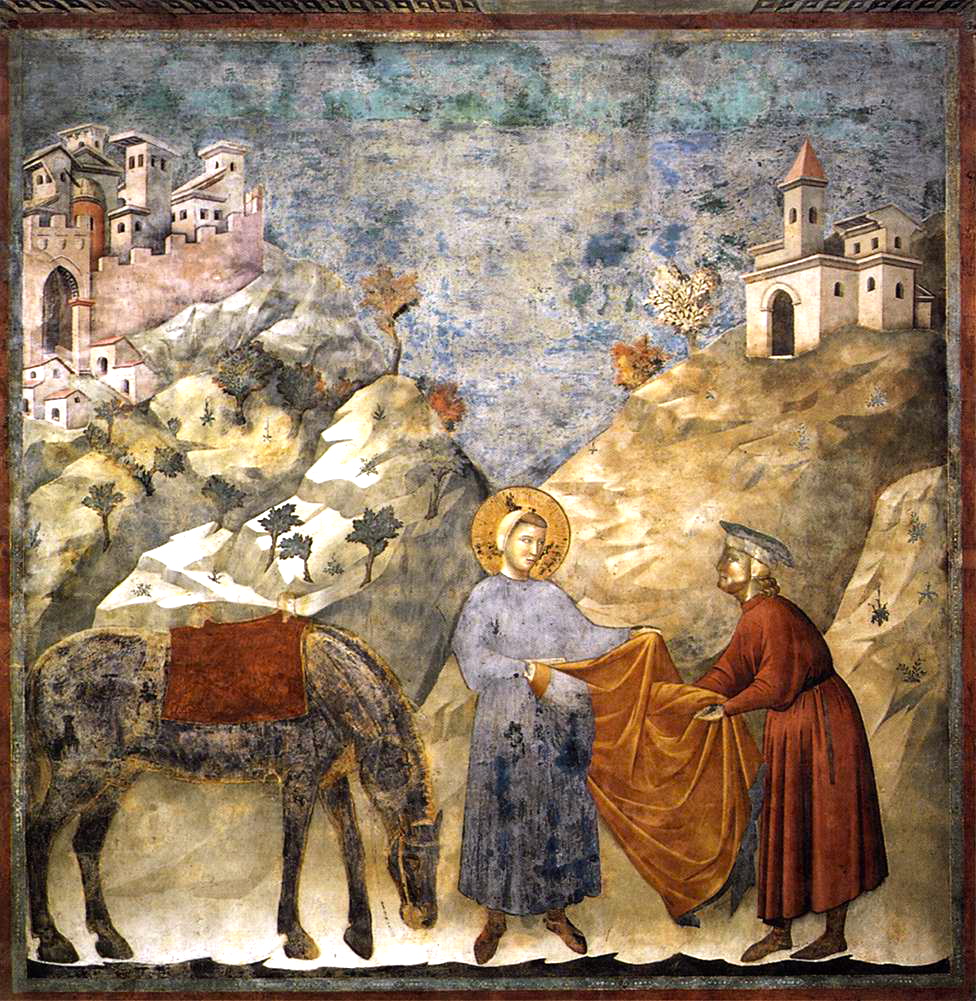
Giotto, "St Francis Giving his Mantle to a Poor Man"

In 2004, along with my colleague Sasha Abramsky, I once again interviewed Padre Bruno and Rosa Marga for my work as a researcher.  Afterwards, I reflected on what I had learned from them over all these years.  I was struck by their constancy in the face of overwhelming odds.  They work for the small victories and see joy in every one, rather than the long road left.  Serenity, I thought, is what makes them so effective and compelling.  Without serenity, they would not be able to endure the suffering that their struggles have brought them personally.  Without serenity they would not be able to bring young people into adulthood with hope, promise, and love.

The theologian Reinhold Niebuhr wrote the “Serenity Prayer” at some point in the 1930s.  It has been widely adopted by many who struggle with changing themselves in a world that resists change.

God, give us grace to accept with serenity
the things that cannot be changed,
Courage to change the things
which should be changed,
and the Wisdom to distinguish
the one from the other.

What is remarkable about people like St. Francis, Padre Bruno, and Rev. Rosa Marga, is that the “wisdom to distinguish the one from the other” leads them to take on the most enduring and difficult challenges of all.  That is real heroism.

Notes and Credits

The opening image is “Daniel et l’ange dans la fosse” (“Daniel and the Angel in the Pit”) by Macha Chmakoff (www.chmakoff.com), a contemporary painter who has an extensive set of works in Biblical themes and images.  The original painting is oil on canvas, 52″ x 39″ (130 x 97 cm).  Ms. Chmakoff is a psychoanalyst and painter who has been exhibited across France and has gained international noteriety for her paintings.  The image was provided by Ms. Chmakoff and is used here with her permission.  She recently had a reproduction of one her paintings, “Jésus, souviens-toi de moi,” exhibited between the columns of the Église de la Madeleine, the magnificent Greek classical church in Paris.

David Bowie’s song “Heroes” was recorded in Berlin with Brian Eno, near the Berlin Wall. When guitarist Tony Visconti and backup singer Antonia Maass snuck away for a kiss near the wall, Bowie wrote them into the song and they became heroes.  The song is a masterpiece of experimentation that sounds so much less than experimental today.  Radical as it was in its day, it’s purely beautiful today, and its sentiment is timeless.

The images of “St. Francis Preaching to the Birds” and “St Francis Giving his Mantle to a Poor Man” are from the series of frescoes known as “The Legend of St. Francis,” which can be found in the Upper Church of the Basilica de San Francesco in Assisi, Italy.  The frescoes date from 1297-1300 and are usually attributed to Giotto de Bondone, though they may have been done by several painters.  These images are taken from The Atheneum, an organization devoted to making tools for art, scholarship and community-building available over the Web.  They encourage people to post photographic images of art from around the world and then make it possible for others to repost and use that art in ways that will bring it to others.

St. Francis’s ministry to animals and to the poor are radical and enduring parts of his ministry.  St. Francis is a constant reminder of the simple fearlessness in Jesus’s ministry.

A Note on Heroes, Villians, and Justice

Not all who are serene and fearless can be called heroes.  I have chosen to dedicate this post to the heroes, but I have to recognize that villains, too, can be fearless and serene.  In this way, they are like heroes, even though they are not.  Let me clarify.

Only those who work for the cause of justice are heroes.  There are others who are equally fearless and serene but who are concerned only for themselves, their narrow interests, and personal pleasures.  They are sociopaths.  Those sociopaths who intentionally harm others are the criminals of sensational accounts in films, television, books, and magazine.  They are rapists and serial killers and destroyers.  Some find a legitimate outlet for their urges in mercenary exploits, military conquest, dogma, and institutional authority.  These sociopaths are dangerous and horrible, but they are not numerous.

Far more pernicious are sociopaths whose violence is exerted at a distance under the cover of ideology and reason.  They kill without ever coming close to the trigger.  They command armies and industries.  They tell us we need them in order to live our own lives and that without them we would not have jobs or homes or food to put on the table.  They are serene.  They are fearless.  They are all around us and hidden in our midst.  “Sometimes Satan,” Bob Dylan sang, “comes as a man of peace.”

As for justice, there are many definitions, but I prefer to keep it simple.  That which reduces needless suffering and cruelty is just.  The definition of needless suffering and cruelty usually is apparent by sight alone, without words.  Once people start to bring words into play, the cause of justice is damaged.  This is a cruel irony for those of us who are writers and seek to paint beauty in words.

The Convention on the Rights of the Child is one of the UN’s landmark accomplishments.  It is a form of aspirational justice, more a signpost on the way to the world we would like to live in than a description of the world we have.  All member-nations of the UN have signed on to the CRC, except for two:  Somalia and the United States of America.  Serenity now.

2 Comments

Filed under art, beauty, Brazil, danger, death, existentialism, ideas, life, truth

E/F – The glass of oil

There are jobs, and then there are jobs.

We built our world on petroleum, especially in the state I come from, Louisiana.  We power our cars and computers and houses with petrol and its funky little brother, natural gas.  Over the course of the long twentieth century, the automobile fueled explosive growth in the American economy and allowed people to spread out in endless suburbs that offered relief and tranquility compared with the noise and chaos of urban life.

Along the Gulf Coast and elsewhere, countless thousands of jobs are devoted to the exploration, drilling, refining, distributing, selling, purchasing, and using of petrol in its many forms.  We create our food with petrochemical fertilizers that rely on the abundant natural gas deposits found deep in the Gulf of Mexico along with oil.  The plastic bags we carry our food in are made of petroleum.  Cosmetics and personal lubricants are made of petrol.

Oil and other fossil fuels have made everything we know possible, from the things we use to the lifestyle of abundance that for some seems an American birthright.  We Americans are the people of the tar.

We eat the oil, and the oil eats us

Back in the 1970s, when gas prices shot through the roof because of the Arab Oil Embargo, the rest of the country went into a tailspin while Louisiana thrived on oil.  The construction of the New Orleans Superdome, opened in 1975, started a downtown building boom in New Orleans that reshaped the city before my eyes as I grew up. Then in the early 1980s, when oil prices fell as the country’s economy recovered, New Orleans and Louisiana went into a tailspin.  The oil companies moved their offices to Houston and drilling shut down as oil fell below $15 a barrel, the price at which it was no longer economical to produce oil in Louisiana.  As the oil money left, people lost jobs all over the state and everyone suffered.

Now, as the Deepwater Horizon blowout has become the world’s worst man-made environmental disaster, Americans face an impasse.  Do we follow Louisiana’s own politicians and call for more drilling?  These are the same politicians who along with other (mainly Republican) politicians around the country created an environment of contempt for business regulation that fueled a lawless world in the boardroom, on the factory floor, and in the marshes and mountains and wildlife prerserves.  Corporate lobbyists wrote environmental and workplace protection laws.  Our social world—our values and the values reflected by our government—made it the casual business of the day to celebrate the sub-prime mortgage market, overlook safety in coal mines, and build drilling rigs without proper blowout protection.  It was the time of our life and there wasn’t an American alive—left, right, or independent—who didn’t just love their IRAs, home equity, air conditioning, and cheap gas.

Un-natural disasters

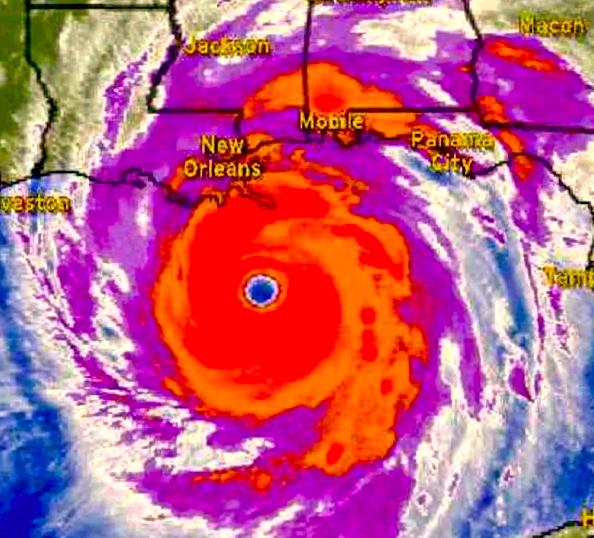
Deepwater Horizon comes almost 5 years after the “natural” disaster of Hurricane Katrina, which continues to show us what can happen when the government abandons its people.  The Katrina disaster was neither inevitable nor natural.  It was a man-made disaster of the first degree, founded upon the same neglect and abdication of social responsibility that are at the core of America’s post-Reagan social contract.

Our world will change as the oil runs out, which it will do one day, sooner rather than later by current predictions.  How many disasters do we need to learn that all of us are made better by a government that provides social protections and guarantees against exploitation—of people, environments, and resources?  The BP oil disaster is our opportunity now for the national courage to get off oil.  Such a matter of fundamental change could be achieved only by a massive state-led effort akin to the New Deal.

For comparison’s sake, here’s The Deal We Got:  oil will kill us, either way.  It’s already started.  If it doesn’t kill us now, it will kill our children or grandchildren.  There’s no going back now on the damage oil has done and will do to Louisiana and the Gulf Coast at large.  Add one hurricane to it this year and it’s over.

Imagine

Can we just think about ending oil?  It doesn’t matter how realistic it seems.  It will hurt.  It hurts to stop any self-destructive addiction.  Yet while it’s going to hurt one way or another, it doesn’t hurt to dream a little.  Ask any hurting person.  Or these pelicans.  Why not …

… deploy the government’s resources to bail out the regular people of Louisiana who will lose their jobs in this tragedy? If it’s good enough for Goldman Sachs it’s good enough for the Bayou State.

… put the Army Corps of Engineers to work creating a levee system that channels the immense force of the Mississippi River to the restoration of the coast? The same government agency that corralled the river in the first place ought to be able to set it free.  Indeed, by cutting off the annual flood, the levees have helped erode the Louisiana wetlands at the rate of one acre per hour. Restoring the annual flood just might be the best way to combat the effects of the oil spill.

… cut our addiction to automobiles and airplanes by building railways—high speed and local—that can rely on wind, hydro, and other safer energy sources? Start with rails in Louisiana so that people there don’t have to buy gas and can still get to work. Put these guys to work at home and let them become a corps of railroad builders who can teach the rest of the nation how it’s done.

Imagine a permanent, federally funded project of restoring and then maintaining one of the world’s most vital and richest wetlands.  Call it real conservation and tip your hat to Teddy Roosevelt (the ex-Republican Bull Moose).  The point is that this is not just an oil spill.  It’s the big one, the wake-up call.  If the fear of losing jobs is what keeps people in Louisiana under the thumb of big oil, then let’s find them other jobs.  Are we slaves?

This isn’t rocket science.  It’s a matter of will.  We are the richest country on Earth, and we can do this if we want to.  While we’re at it, we can finally clean up the mess and set things to right from Katrina.  What America does shows the world—and more importantly, ourselves—what we really want and what we really care about.   What shall we do this time?

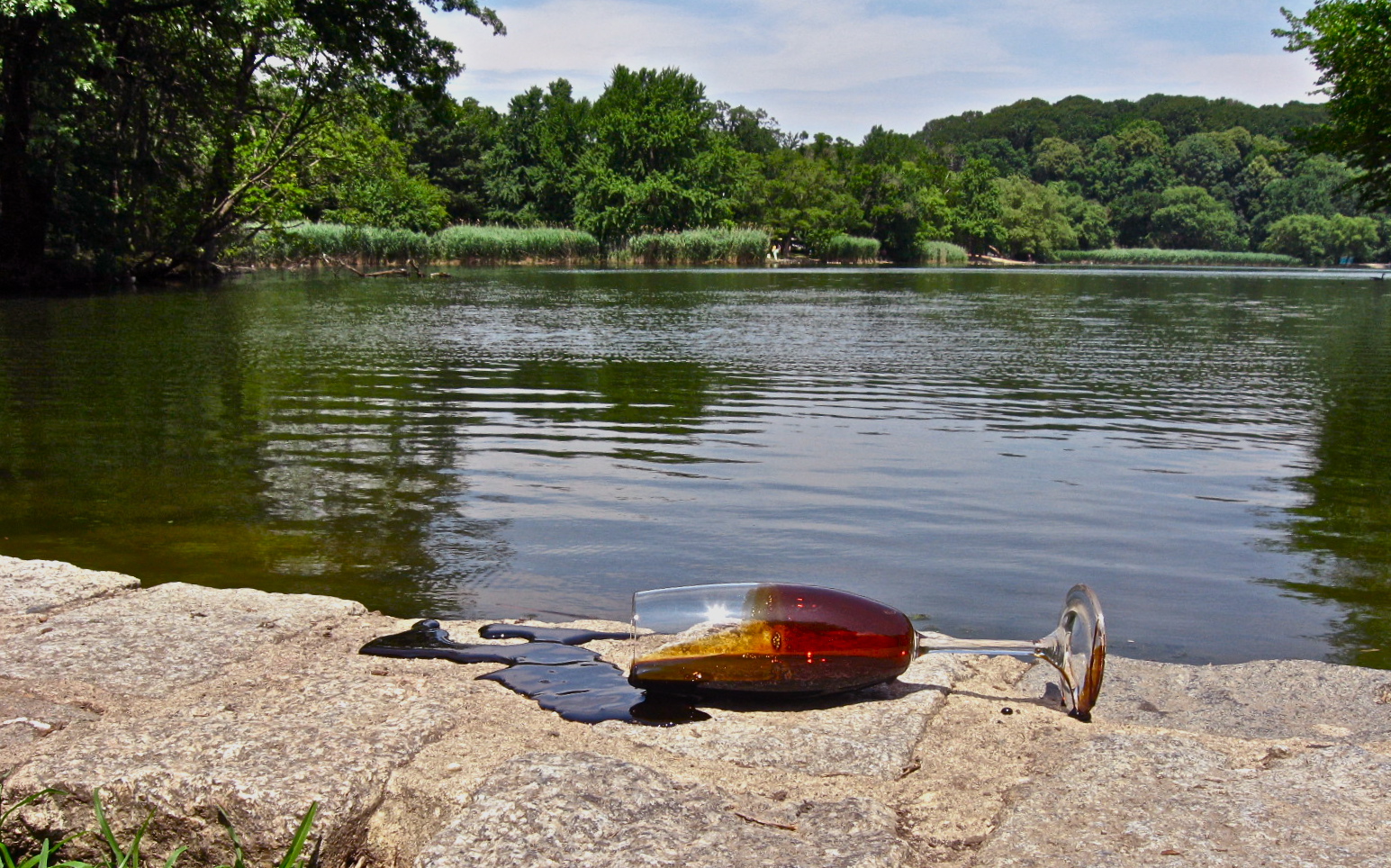
The glass

The glass is a champagne flute from Williams Sonoma.  I photographed it on the southern edge of the pond in Prospect Park, Brooklyn.  The pond is home to a lot of turtles.  Fish are stocked and then fished out by the people who live in the neighborhood.  Macy’s sponsors an annual fishing tournament in the park.  Swans, geese, ducks and other birds make the pond home, for at least part of the year.  Of late, there has been a series of mysterious animal deaths in the park, prompting outrage and concern by folks all over the city.  Comprehensive coverage of what started with an injury to John Boy the Swan, which later resulted in his death, can be found in Gothamist and in the Brooklyn Paper.  Video of John Boy can be found here.

Notes and Credits

All photographs are by the author, unless otherwise noted.

On the petrochemical sources of our food, no one has written more eloquently than Michael Pollan.  In his book, Omnivore’s Dilemma, he provides an accounting of the carbon footprint beneath the food we buy so cheaply in the supermarket, as well as the government policies that prop up the union of agribusiness and petroleum.

The sub-title, “We eat the oil and the oil eats us,” paraphrases the title of June Nash’s classic book about Bolivian tin miners, We Eat the Mines and the Mines Eat Us.  The book’s title comes from the way the miners talked about their relationship to the mines, mining, the mountains, and the tin companies that exploited them so ruthlessly.  Louisiana is like that, a place being eaten up by big companies who could care less about the local people apart from their willingness to work for low wages without union representation.  When I was a kid, we sometimes called New Orleans “The Tegucigalpa of the North.” It was sort of joke, just sort of.

On levees and their importance—I grew up about a half mile from the levee.  I used to play behind the levee every day in the batture, the swampy land between the levee and the river itself.  We played army and pirates behind the levee when we were little.  Then we smoked pot and made out.  When I was in college at Loyola University in New Orleans, I used to ride my bike from home (commuter student) to the college on the levee.  I wrote one of my best songs, “Down By the River,” about falling in love with a brown-eyed girl who gave me my first kiss on the levee.  It’s a bluegrass tune.

I took the satellite image of Hurricane Katrina from weather.com a few days before it made landfall.  I was holed up in Dallas, Texas, at my mother-in-law’s.  I happened to be there visiting, for reasons that had nothing at all to do with the storm.  My parents went to my brother’s place in Nacogdoches, Texas—now they were storm refugees and only went home at the end of October, after 2 months in Texas.  I kept that image of Katrina.  In my anger over the storm and the abandonment of New Orleans, I made it the wallpaper of my computer desktop, not changing it for a couple of years.

The battered house is where my father grew up in the 1940s and 50s.  It was on the corner of Lafaye and Frankfort Streets, which was in a new subdivision being made up near the shore of Lake Ponchatrain, where the Air Force had major installations during World War II.  My grandparents moved there after the war, once my grandfather— “Grumpy” as we called him—got home from the Pacific and took a job with the Postal Service, where he would work until his retirement.  I remember that house in the 1960s and early 70s.  I was all of 5 and everything was happy there.  Grumpy made ice cream in the back yard and told us funny stories.  He let us grandkids take a turn or two each on the hand-crank.  It was good ice cream.  The house is no longer there.

Environmental Impact Statement

None of the fish, turtles, geese, ducks, or swans that call Prospect Park home were endangered in any way by this photo shoot.  In place of oil, I used all-natural, unsulphered molasses, which has the look of oil but is quite sticky and tastes much better.

Molasses is a rather suitable substitute for oil in other ways as well, since it’s a Louisiana product that probably does much less damage than oil.  My grandparents grew up on sugar plantations up the river from New Orleans.  Grumpy used to tell us how they refined sugar from cane, every single step, including molasses.  He knew sugar.  Granny used molasses to sweeten the pecan pies she made every year with the nuts she gathered from the tree in her own backyard.  Molasses has been around for a long time without causing the epidemic of obesity that can be traced to high fructose corn syrup, which in turn can be traced be to the agricultural policies of the Nixon administration (will we ever run out Republicans in this story?), which in turn can be traced to petrochemical fertlizers and in the end:  oil, oil, oil.

The use of the first-person, plural possessive—we—in this essay is intentional.  We all own the oil spill.  The politicians who created the culture of disregard for public safety and environmental sustainability in business and corporate life are there because they received enough votes to win office.  The people who voted them in office did so for various reasons that Thomas Frank documents pretty well in What’s the Matter with Kansas and which for Louisiana are intricately related to the famed “Southern Strategy” that the Republican party adopted with Richard Nixon’s successful presidential campaign in 1968.  The race politics that underlay all of this are a tangled (yet quite simple) web that deserve another essay in their own right.  This is how America is, for whatever it’s worth.  Those of us who didn’t vote for these politicians, we’re also complicit.  We use the energy that comes from petrol.  We might want to laugh at Sarah Palin’s convoluted explanation of how environmentalists are really responsible for the Deepwater Horizon tragedy, but it’s our culture and we’ll keep driving to work every day, even if on a bus powered by gasoline or its funky little brother, “natural” gas.

We are the people of the tar.

10 Comments

Filed under danger, death, failure, freedom, hubris, life, Louisiana, Park Slope, politics, riches, truth

The truth and type-casting

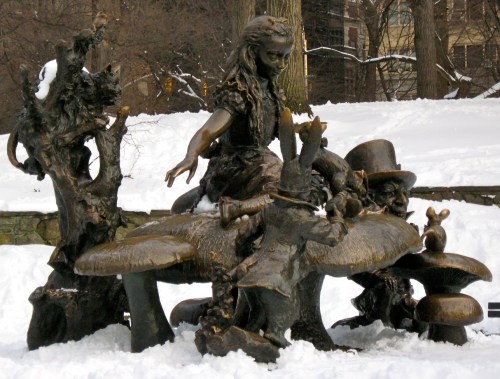
There are two kinds of people:  those who follow and those who don’t.  Of followers, there are two kinds:  those who stay put, and those who go somewhere.  Of followers who go somewhere, there are two kinds:  those who are led and those who are pushed, the latter including those who fall in holes  whether pushed or not (go ask Alice).  Of followers who stay put, there are two kinds:  those who stay in a place, and those who stay in a particular frame of mind.

Of those who do not follow, there are three kinds:  poets, prophets, and migrants.  Of poets, it is said that they show us who we are.  Of prophets, it is said that they show us who we should be.  Of migrants, it is said they show us where to go next.

Poets, prophets, and migrants are called.  They do not choose who they are, and mistakes can be made when callings are crossed, whether by the one who is called or by those doing the calling.  When poets are mistaken for prophets, everyone is deceived.  Cults are formed and lives are wasted.

There’s a whole lot of people in trouble tonight from the disease of conceit
Whole lot of people seeing double tonight from the disease of conceit
Give you delusions of grandeur and an evil eye
Give you the idea that you’re too good to die
Then they bury you from your head to your feet
From the disease of conceit.

Bob Dylan, “Disease of Conceit”

Prophets are rarely mistaken for poets, but when they are, they are generally neither and the poetry is awful.  Though it is nearly impossible for a poet to be a prophet, either might be a migrant, whether on land, in dreams, or of the mind.

Leadership is an attribute given by those who follow to someone else, who may or not be the kind of person who follows.  The truth is—leadership has nothing to do with being a follower or not.  In the end, perhaps there really are only two kinds of people:  those who do well when type-cast, and those who only begin to thrive when cast against type.

Notes and Credits

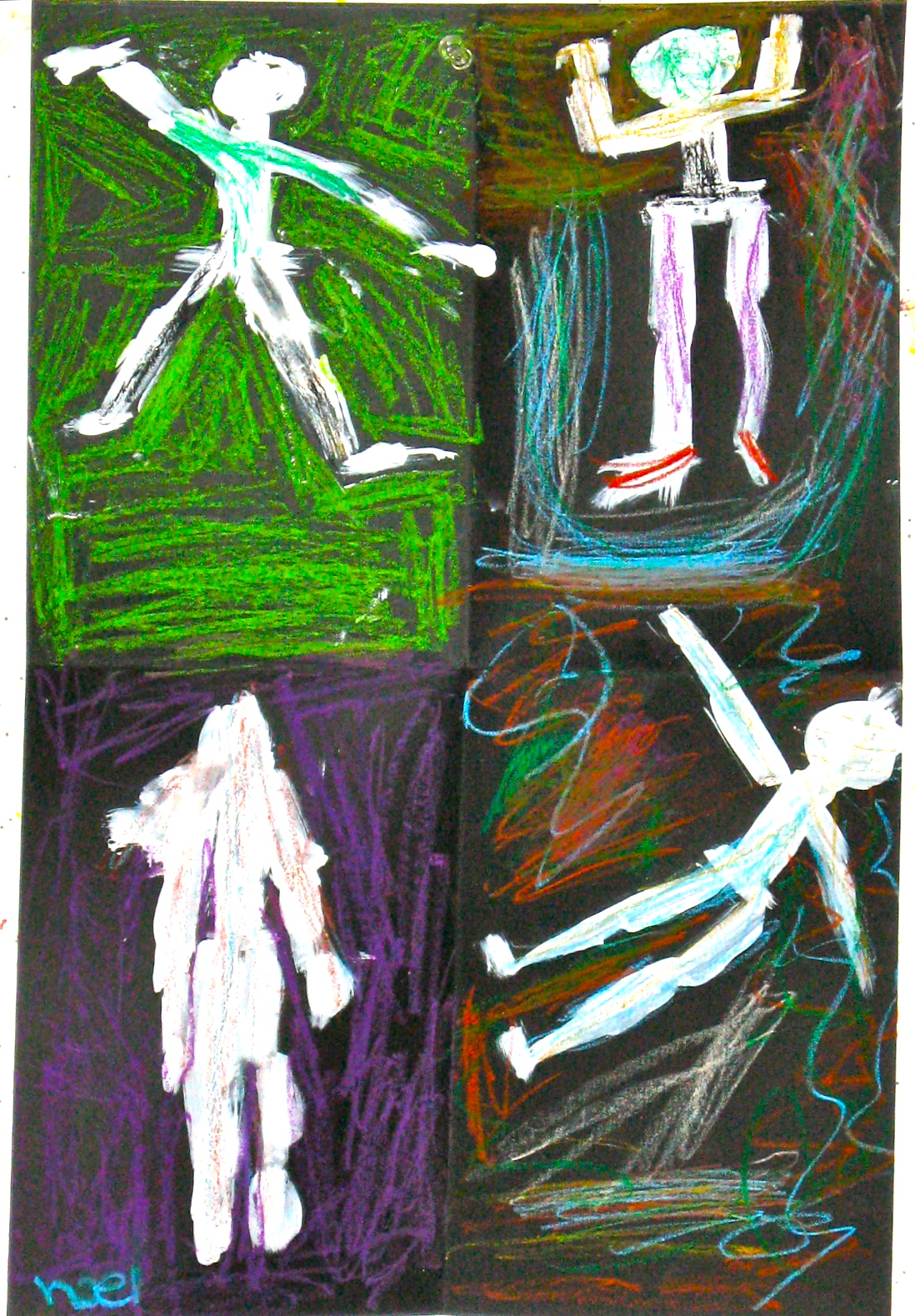
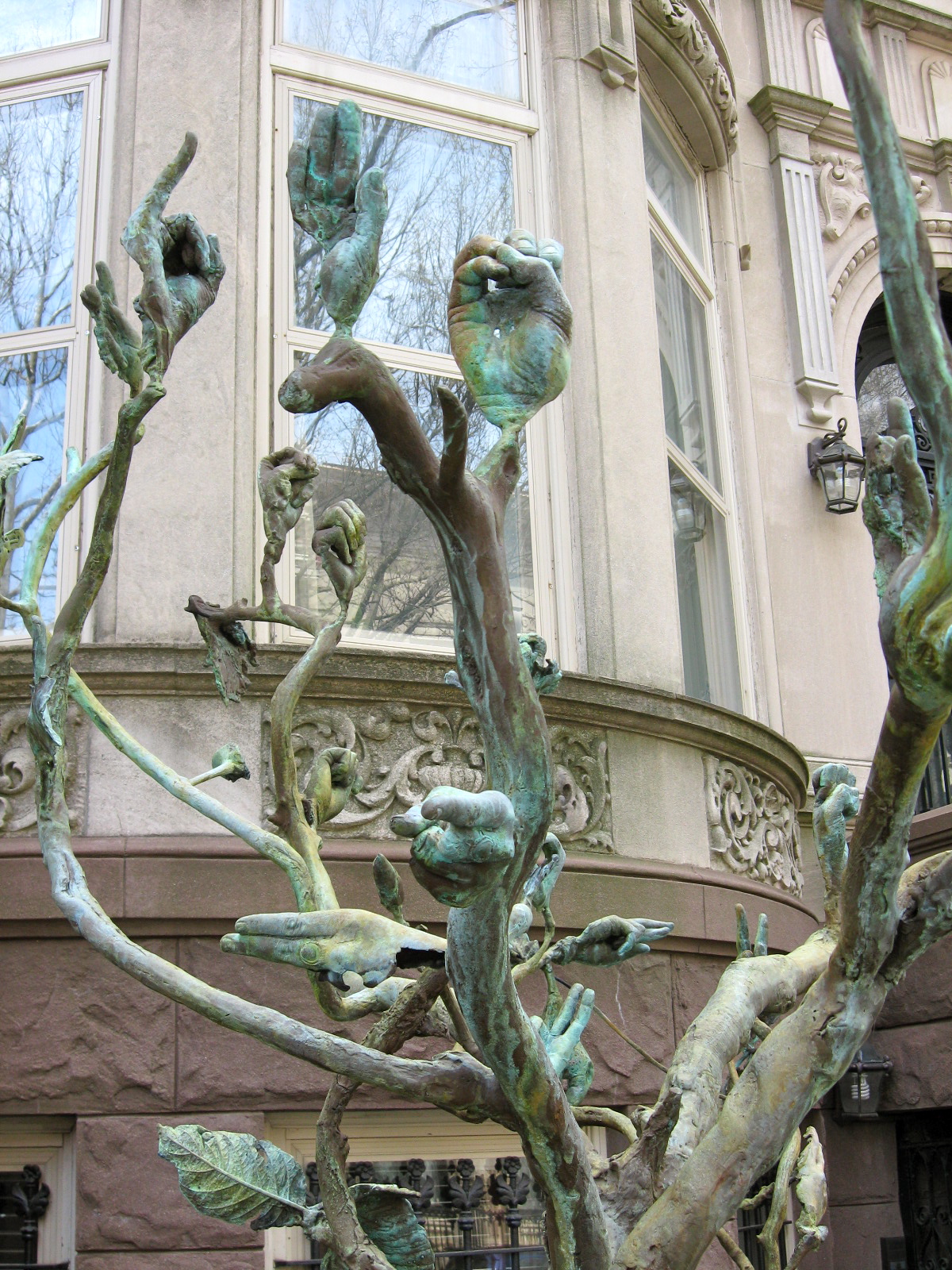
The photos were all taken by the author in the neighborhood of Park Slope, Brooklyn, in 2008, 2009, and 2010.  The first is a photo of an art project my son did in the first grade (2009), drawing the human form.  The second is the tunnel at the northwestern entrance of Prospect Park.  The third is a garden scultpure in front of a house on 2nd Street, near the corner with Prospect Park West.

Bob Dylan was called to be a poet, but the people who loved him wanted him to be a prophet.  It cost him, and some of those loved him, twenty years. After years of reflection, Dylan wrote that by the mid-1980s “[e]verything was smashed.  My own songs had become strangers to me. I didn’t have the skill to touch their raw nerves, couldn’t penetrate the surfaces.  It wasn’t my moment of history any more.  I couldn’t wait to retire and fold the tent”—Chronicles, Vol. One (Simon and Schuster, 2004), p. 148.

Dylan wrote “Disease of Conceit,” in 1987 as he began to explore a new musical identity more aligned with his own sense of self and his mission as an artist. The song would be the eighth track on Oh Mercy, the album that set him on the path to redeeming his career with a whole new audience by the mid-1990s.  In the fall of 1989, I saw him perform at Hill Auditorium on the University of Michigan Campus in Ann Arbor.  It was the third show of his I had seen at that point in my life and by far the best.  Toward the end of the show – as either the closing song or the last encore – he brought down the house with “Disease of Conceit.”  The poetry was breathtaking.

As for those who fall down holes …

Alice on the toad-stool, Central Park, New York, December 20, 2009

3 Comments

Filed under art, freedom, ideas, life, Park Slope, poetry, truth, vanity

E/F – The glass of life

God looked at everything he had made, and he found it very good (Genesis 1:31).

Life is full of contradiction, and so are attempts to understand where life came from, why we are here, and what will become of us.

An old English proverb proclaims:  There but for the grace of God go I. The proverb sums up the randomness of the universe—the order-out-of-chaos, the utter, unexplained, and unaccounted for contingency of life itself—as a matter of Divine will.

Some have interpreted this idea darkly, as for example the Reverend Jonathan Edwards, whose God is angry and holds sinners over the pit of hell “much as one holds a spider, or some loathsome insect over the fire.”  For Edwards, only God’s “pleasure” or “arbitrary will” stood in the way of eternal suffering, and the sinner “hang[s] by a slender thread, with the flames of divine wrath flashing about it …”  Lions and tigers and bears seem meek by comparison—oh my.

For those who dwell on the goodness of the Earth, however, life as a gift of grace is a liberating thought, providing the freedom to leave other-worldly issues alone.  Instead, one’s gaze turns to the things that matter in this world, and in this moment a new kind of human freedom is born.  The world beyond this one is indeed arbitrary and unknowable, but in this world what we do matters.  Here we, not God, are responsible.

This notion of contingency, of the arbitrary nature of causality in the universe, isn’t a terribly God-bound thought.  The grace of God in the proverb can be understood in quite godless terms as the general force of randomness as it functions in the entropy of the universe.  Either way, life is contingent on a lot of things that are completely out of our control, and in that contingency, ironically, good and evil are placed in human hands and human hands alone.

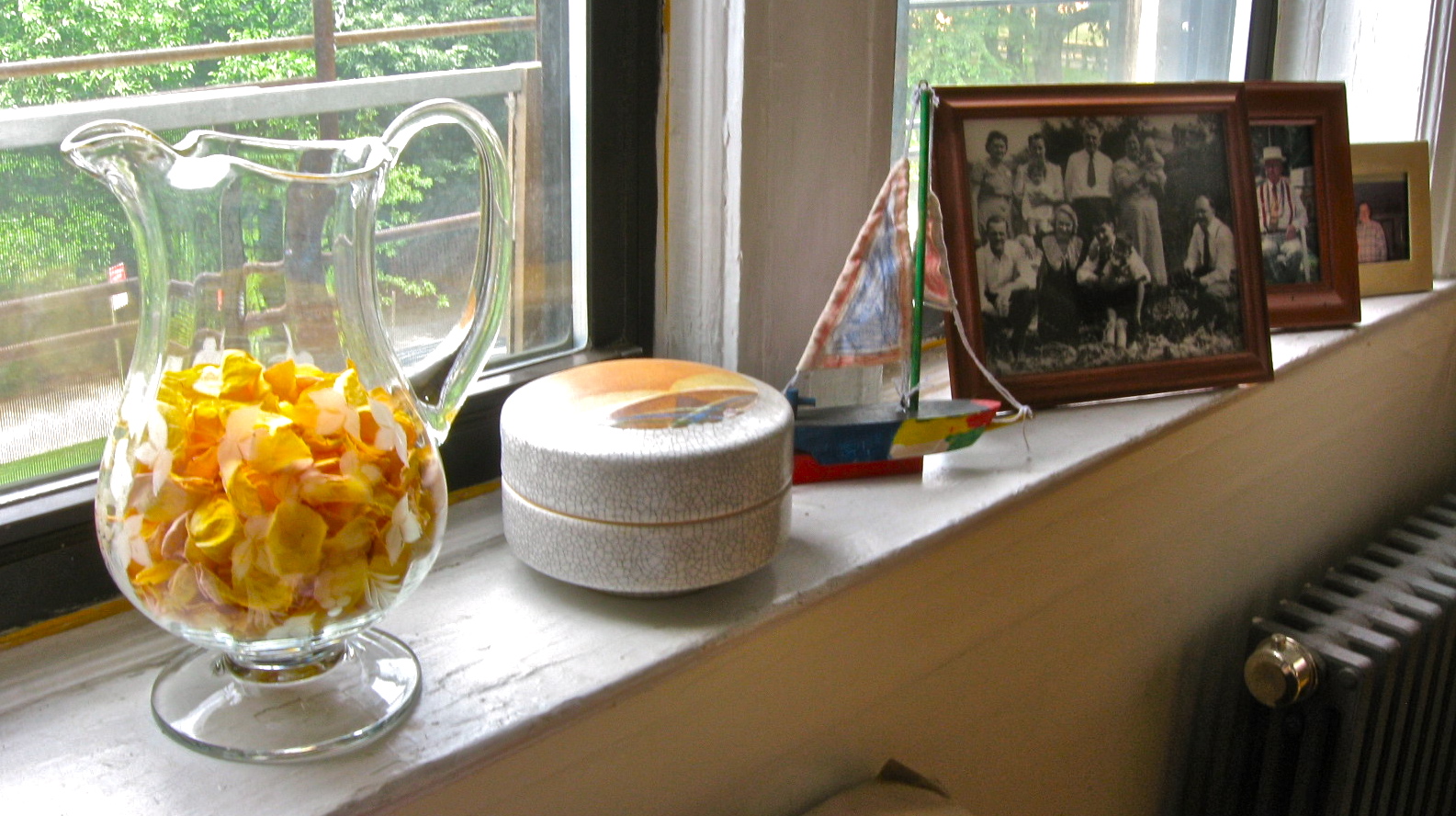
The pitcher and its window sill

A couple months ago, I had a party.  I’d moved into a new apartment and wanted to share the space with some friends.  We prepared for the party all day, cleaning house and eventually going out to buy some good cheese, wine, bread, the makings of spinach salad, and such.  Along the way, my girlfriend bought a dozen yellow roses.

After the party, once the roses had dried, I took the petals from the stems and placed them in a bowl.  I had hoped they would smell like roses and I would crush them to place them in a bowl as potpourri.  Alas, they never smelled so good, but the yellow petals were very pretty and I put them in the pitcher, which sits on the window sill and now adds a dash of yellow to the room.

On this window sill in my living room, I keep a number of things.  There is a ceramic covered bowl that I bought in 1989 the first time I ever went to the Ann Arbor Art Fair.  It was made by Rob Wiedmaier, who worked out of St. Joseph, Missouri.  Next to that is a little wooden toy sailboat that my son made from a kit he received in the gift bag at another boy’s birthday party.  And then there are three photographs of my family.

Buddy-Buddy, Grandpa #1

In the first photograph, we have the Krupas, from about 1941 or so.  The patriach, great-grandpa Krupa, stands in the center.  His three children are there—Joe, Johnny, and Annie.  Joe was my grandfather, who my brother and I called “Buddy-Buddy,” because he that’s what he was, our buddy.  Next to great-grandpa Krupa is my grandmother, Joe’s wife, Mary Niznik.  She’s is holding my mother, Mary, who is about one year old in this photo, looking bright with her Shirley Temple curls.  These were good Slovak people from the hills of the Monongahela Valley in western Pennsylvania.

Buddy-Buddy was a steelworker. After he died in 1969, my grandmother came to live with us, and for the next seven years, she was the most wonderful storyteller, babysitter, friend, and ally my brother and I ever had.  She made stuffed cabbage roles, she ground her own meat, and she made the Easter Bread every year, just like in the old country, which she called “Austria-Hungary.”  I took Joseph as my confirmation name in the memory of my Buddy-Buddy.  My brother named his son Joseph.

Grumpy, Grandpa #2

The next photo over is of my other grandfather, Ernest John Guidry, III.  In the photo he is old, in his mid-70s, sitting in his back yard decked out for Mardi Gras.  My brother and I never called him “grandpa.”  We always called him “Grumpy,” a nickname that my mother gave him because he was always so jolly and full of life.  He had 17 grandchildren, and he called each and every one of us “Peanut.”  When this photo was taken, he had recently been diagnosed with Parkinson’s Disease.  He died within a year or two of the diagnosis, thankfully, we all felt.

The good fight

In the final photo, half hidden behind the rest on the window sill, are my mother and father.  They were photographed in the den/living room of their house in River Ridge, Louisiana, the house where I grew up.  I remember the first time I saw the place.  It was in 1973, late summer. Mom took my brother and I there—we were all of 8 and 9—and there wasn’t much of a house.  Just a slab of concrete on a sand lot with lots of trees all around.  There were only four houses on the street.  A couple months later, there was a house on our slab, and we moved.  Such it was in the 70s.  My father still lives there.

The photo is from the better days, before the multiple sclerosis put mom in a wheelchair and changed her body and all of our lives in ways that are all but impossible to describe.  She passed away on June 27, 2007, and for her funeral mass, she had the following read from Paul’s second letter to Timothy, which I forever think of when I think of her—

I for my part am already being poured out like a libation.  The time of my dissolution is near.  I have fought the good fight, I have finished the race, I have kept the faith. —2 Timothy 4:6-7

Consider the lilies

Such is life, with no reason to be and no reason to end, but every reason for the living to live.  Do not ask, but live.  Run the race you are given.  Be simple and don’t strive.  Be like the flowers of the field.

lilies

Consider the lilies how they grow: they toil not, they spin not; and yet I say unto you, that Solomon in all his glory was not arrayed like one of these. —Luke 12:27

Notes and Credits (Grandpa #3)

The photographs of the pitcher, the window sill, and the lily were taken by author.  The window sill was photographed as it appears in my living room.  Behind it, through the window, is the Bowling Green of the Prospect Park Parade Grounds in Brooklyn, which has been the photographic subject of a few postings so far.

The lily grows in my apartment building’s garden next to the sidewalk.  The garden isn’t kept or tended very well.  It mainly just grows there, though I do see Bart’s mother, the landlord, sweeping and cleaning and watering from time to time.  I saw the flower when returning home from a run in the park with my son.

Of all the people in the photographs, only one is still alive, my father.  He is 70 years-old now, in quite robust health, and determined to reach 100.  His odds are better than average.  His father, who was pictured as described, died at 77, quite young for our family.  My father’s mother died at 91.  His grandmother, EJ’s mother, died at 101 or 102.  The rest of our aunts and uncles are in their 80s and 90s.  My odds, on the other hand, are something of a split decision, for my mother’s side of the family—the Krupas and Nizniks—mainly seem to die in their 50s and 60s.  Mom was 67 when she died, like her mother, who made the cabbage rolls and the Easter Bread.  Buddy-Buddy was about 58 when he passed on.  There but for the grace of God go any one of us, on any given day, at any given age.

For the record, my son and his cousins call my father “Grandpa,” because that’s what he is.

The Family Krupa, c. 1941

3 Comments

Filed under ageing, body, entropy, existentialism, freedom, life, philosophy, truth

E/F – The glass of writing

“… let no mournful yesterdays
disturb thy peaceful heart.”

Ellen M. Huntington Gates, “Sleep Sweet”

“Of the making of many books there is no end,
and in much study there is weariness for the flesh.”

Ecclesiastes 12:12

When the glass is empty the writer searches, at times desperately, for some truth or experience to put on the page.  The writer writes to make life real.  It is an alchemy that turns nothing into something.  Without writing, the writer is hollow, small, almost nothing.

When the glass is full the writer becomes like a god, though not so much a god of creation as one who reorders worlds that already exist.  The writer recreates what he or she has known in order to say something about it.  At the end of the day, it is a gratifying act.

Reverie

In 1967, Gloria Steinem interviewed Truman Capote for an article that was published in McCall’s.  It was a candid interview.  She asked him how he would like to be described as a writer and as a person—adding “without false modesty,” just in case.  Capote replied with grace and clarity.

“As a writer, that I’m a good artist, a serious craftsman; that my writing gives pleasure in itself, regardless of what I’m writing about.  I spend a great deal of time with that object in mind.  Because to me, the greatest pleasure of writing is not what it’s about, but the inner music that words make.”

Early in his career, Capote was praised for the beauty of his sentences.  His prose was impeccable and his writing almost alone brought him into social circumstances the likes of which he never could have dreamed as the model for Dill in Harper Lee’s To Kill a Mockingbird, a lonely child of divorce in a small Alabama town.

But Capote flew too close to sun.  In a terrific irony—the exception that proves the rule, it seems—Capote’s downfall came when he tried to write what he (thought he) knew.  The serialized chapters of his long-awaited novel, Answered Prayers, hewed too closely to the real lives of his New York socialite crowd.  Scandalized, Capote’s supposed friends abandoned him and he learned how far, indeed, Monroeville, Alabama, was from New York’s Upper East Side.

Capote had abandoned the “inner music” of his words for a cloying attempt that was less writing what he knew than writing what he both coveted and hated.  Such is vanity.

Vanity

To write is to be like a god, one of those fundamental acts of hubris that always results in a fall, whether in the Garden of Eden or Greek mythology.  The “inner music” of Capotean reverie was to Franz Kafka a siren call to vanity and self-worship through the admiration of others.  To his close friend and ally, Max Brod, Kafka wrote in 1922—

“Writing is a sweet and wonderful reward, but a reward for what?  Last night it was as clear to me as the catechism learned in childhood that it is a reward for devil worship. This descent to the powers of darkness, the dubious embraces, and all the other things that doubtless occur down below and which we know nothing about up here when we write our stories in the sunshine.  Perhaps there are other kinds of writing, this is only one I know…”

The writer was oblivious to this affliction, mindlessly scribbling away beneath a penumbra of vanity that surrounded the sun itself.  Like sex, writing was at once a sensual and gratifying pact with the devil that was utterly essential to living experience—and at the same time, an act that obscured and defamed the very essence of love itself.

“It is the vanity and the hedonism, which flutter around and around either one’s own or another’s form in a ceaseless search for pleasure until in the end, by this constant repetition, a whole planetary system of vanity is created.”

Kafka’s life was filled with deep and vital relationships, with both women and men.  His Madonna-whore complex notwithstanding, he knew how to connect with others, recoiling only from those women he thought of marrying.  Writing was Kafka’s only salvation, the only thing that made him seem real to himself.

As a writer, however, Kafka was a failure in his own estimation.  His work remains for us mainly because his close friend and literary executor, Max Brod, famously chose to ignore to Kafka’s request to destroy all the remaining manuscripts, which included his novels The Trial, The Castle, and Amerika.

Prayer, a writerly cup

The photo of the cup of tea at the beginning of this post was given to me by a friend, Maghan Lusk.  She is from South Carolina.  In 2008-09, she wrote a blog called “[a creative writer’s] life, uncensored.”  On the blog, she wrote about writing, managing seamlessly to intersperse her own experiences with topical matter.  Her writing and point of view suggested a very thoughtful person who took the time to understand why people were doing what they did, rather than judging them and tossing off opinions.

In 2009, she shut down her blog to work on her first novel, which she has now completed.  Of her desk and cup she wrote—

“When I sit down to write, I make a pot of Ceylon orange pekoe (2 tbsp of loose tea, 1 tbsp of lemon curd, 1 tbsp of honey).  And I warm the pot before I add the boiling water – it’s a highly methodical process.  I like the color, so I always drink from a glass tea cup.  The pot in the back belonged to my mom before she married my dad (27 years ago).”

Before Maghan turned the pot to the support of her writer’s craft, her mother used it to warm the water she soaked her feet with.  Behind the pot, on the edge of the chest-of-drawers, is a framed poem, “Sleep Sweet,” by Ellen M. Huntington Gates.

The desk itself is piled high with the artifacts of Maghan’s life and work.  In the stack of books are admired pieces, atop which sits Marilynne Robinson’s Gilead, the much-celebrated novel set in Iowa, in which the Rev. John Ames writes out a family history for his young son.  The Reverend’s wife calculated that all the sermons he had written across his life of preaching would come to 67,500 pages of prose, or 225 books by the Rev.’s own calculation, “which puts me up there with Augustine and Calvin for quantity.”  In Robinson’s prose, Rev. Ames takes us to a place in writing so much finer and wonderful than Kafka’s, less self-involved than Capote’s, more human and more in touch with the real reasons we write—to reach out to someone else.

“For me writing has always felt like praying, even when I wasn’t writing prayers, as I was often enough.  You feel that you are with someone.  I feel that I am with you now, whatever that can mean …”

Feeding the Wolves

There is a famous Cherokee fable that goes like this.

An elder Cherokee was teaching his grandchildren about life. He said to them, “A fight is going on inside me. It is a terrible fight and it is between two wolves.  One wolf represents fear, anger, envy, sorrow, regret, greed, arrogance, self-pity, guilt, resentment, inferiority, lies, false pride, superiority, and ego.  The other stands for joy, peace, love, hope, sharing, serenity, humility, kindness, benevolence, friendship, empathy, generosity, truth, compassion, and faith. This same fight is going on inside you, and inside every other person, too.”

The children thought about it for a minute and then one child asked his grandfather, “Which wolf will win?”

The old Cherokee simply replied, “The one you feed.”

Capote fed both wolves, with his life and with his words.  He was as destroyed by writing as he was acclaimed for it.  The same thing happened to Hemingway.  Kafka—and possibly Faulkner—fed the wolves with words alone, leaving their lives to become shambles of unrequited desire.

Sylvia Plath fed both wolves.  She fed them with her words and her flesh.  She married a man, Ted Hughes, who believed that a writer had the duty to live beyond all morality, to use his or her own life to build the experiences that would come to life in words.

To be an artist is a dangerous thing.  It is a special role, a special calling that cannot be resisted.  From the beginning of time—Lascaux to the Bible to Pynchon and Picasso and Joe Strummer—artists have helped us know who we are and how we live.  Some of them handle the role better than others.

Notes and Credits

I owe thanks to Maghan Lusk for sharing her photos and story for this posting, as well as for insightful correspondence over issues of writing, spirituality, and living in the Deep South over the last year or so.

Capote’s interview was by Gloria Steinem, “‘Go Right Ahead and Ask Me Anything.’  (And So She Did) An Interview with Truman Capote.”  McCall’s 95 (November 1967), 76-77, 148-52, 154.

Kafka from: Letter to Max Brod, July 5, 1922, in Franz Kafka, I Am a Memory Come Alive:  Autobiographical Writings, ed. N Glatzer (New York:  Schocken, 1974), p. 223.  An interesting source for Kafka information (though not the only one I used, of course) and condominiums in Miami can be found here.

Gilead quotation:  p. 19 of the Picador, 2004, edition.

The Cherokee fable of the two wolves is widely known.  The version posted here was taken from a website called “First People, The Legends.”  The story is the much the same in its various posting around the Web.

The photographs of books were taken by the author, on his own desk.  Disclosure:  I have not read Gilead, but I will do so shortly.  I have not read In Cold Blood, but I saw the movie with Robert Blake a long time ago on late-night tv.  I have not seen the movies of Capote’s life, neither Toby Jones’s nor Philip Seymour Hoffman’s.  The copy of In Cold Blood in the photograph was found on the sidewalk in Park Slope one day.  I have read much of Kafka’s writing—novels, stories, and letters, and I saw the movie.

2 Comments

Filed under art, beauty, danger, failure, fiction, ideas, life, love, risk, truth, writing

The truth and spring-time

April is the cruellest month, breeding
Lilacs out of the dead land, mixing
Memory and desire, stirring
Dull roots with spring rain.

These, I, singing in spring, collect for lovers
Collecting, I traverse the garden, the world—but soon I pass the gates,
Now along the pond-side—now wading in a little, fearing not the wet …

Everything here is yellow and green
the ground, that winter nightmare,
has cured its sores and burst
with green birds and vitamins

The bees are flying. They taste the spring.

I took a broken root to fling
Where the proud, wayward squirrel went,
Taking delight that he could spring

Oh, give us pleasure in the flowers to-day;
For this is love and nothing else is love,
The which it is reserved for God above

Notes and Credits

T. S. Eliot, The Waste Land, ll. 1-4

Walt Whitman, Leaves of Grass, #38, These, I, Singing in Spring, ll. 1, 4-5

Anne Sexton, It is a Spring Afternoon, ll. 1, 30-32

Sylvia Plath, Wintering, l. 50

W. B. Yeats, An Appointment, ll. 2-4

Robert Frost, A Prayer in Spring, ll. 1, 13-14

All the photos were taken by the writer in Prospect Park, Brooklyn – except for the white roses, which bloom every year in Tom and Laura’s backyard in Park Slope, Brooklyn.  The squirrel is the most recent, taken as he chopped up and dropped leaves and twigs and flowers on all of us baseball parents while our children were at practice last week.

For the W. B. Yeats poem, I credit Jim Tolstrup, who posted on this poem and squirrels and anarchy a couple months ago.

9 Comments

Filed under beauty, life, love, Park Slope, poetry, truth

The truth and every purpose

February 10 , 2010

There is an appointed time for everything,
and a time for every affair under the heavens.

A time to be born, and a time to die;
a time to plant, and a time to uproot the plant.

April 21, 2010

A time to kill, and a time to heal;
a time to tear down, and a time to build.

A time to weep, and a time to laugh;
a time to mourn, and a time to dance.

October 31, 2009

A time to scatter stones, and a time to gather them;
a time to embrace, and a time to be far from embraces.

A time to seek, and a time to lose;
a time to keep, and a time to cast away.

December 21, 2009

A time to rend, and a time to sew;
a time to be silent, and a time to speak.

A time to love, and a time to hate;
a time of war, and a time of peace.

April 29, 2010

Notes and Credits

The photos of the tree at the beginning of this post were taken by the author from my dining room window on Caton Avenue in Brooklyn, 11218.  The tree is in the Bowling Green of the Prospect Park Parade Grounds.

The photos of the trees forming an arch over the sidewalk were taken by the author at the Prospect Park Parade Grounds, Caton Avenue sidewalk, 11218.

The story:  Ecclesiastes 3:1-8

And a time to sing whilst riding on horses …

4 Comments

Filed under beauty, death, existentialism, freedom, ideas, life, Park Slope, philosophy, truth, vanity