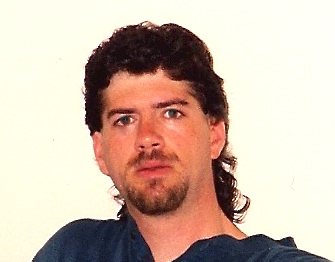
The truth and mullets

me-mullet1

Hypothesis, H1:  The truth is a mullet.

Hypothesis, H2:  The mullet is the truth of all haircuts.

First, no matter how good or bad the truth is, it’ll always grow out, though this follows a distinct trajectory depending on how bad, good, or great the haircut (or truth) was in the first place.  The first few weeks of hair growth can turn a really bad haircut into a thing of beauty.  If the haircut was good in the first place, it becomes truly great during these first few weeks, as the early growth adds that “natural” look to a solid foundation.

By contrast, a really great haircut has nowhere to go but down:  it’s too good to be true (or too true to be good?).  Consider this a lesson in how to learn about truth from your hair.  Starting out at the top is never a good thing.  Adding insult to injury, you never realize how great that haircut really was until you see how bad it looks with just a couple weeks’ growth.

Null hypothesis, H0: The “truly great haircut” can endure.

Second, there are two undeniable truths about mullets:

(a)  No matter how unpopular the mullet may be in any given place or time, there will be at all times some community, somewhere, in which the mullet rules.

(b)  For this reason, the mullet is indeed the universal haircut, even though it will never be universally dominant in all places at one time.

This is the essence of the truth:  like the mullet or a proposition by Michel Foucault, the truth is everywhere and nowhere at all.  The only other thing one could wish for is a picture of Foucault with a mullet.

Third, the mullet passes muster as a universal truth.  I can still recall a group of kids in Brazil I knew about 15 years ago, playing soccer one afternoon.  They were poor kids, gang kids, people I worked with.  The star player was the spitting image, in miniature, of Richard Dean Anderson, complete with a picture-perfect MacGyver mullet – and of course all the boys called him MacGyver.

Finding: The mullet is a transcultural, transhistorical, and (potentially) post-national metanarrative that can reconcile Michel Foucault and Allan Bloom in less than 500 words.

Fourth and for further research, the mullet, like the truth, sets you free.  Ask anyone who has ever had a one.  When your hair is just a little bit longer in the back than in the front, anything is possible.  People will listen to you, fear you, love you, and revere you, like Billy Ray Cyrus in 1992.  But that’s the thing with mullets and truths and the freedom they create.

Mulletude, like truth and fame and some other, more ubiquitous pleasures, seems to last about fifteen minutes at a time.


3 Comments

Filed under Allan Bloom, Billy Ray Cyrus, body, freedom, MacGyver, Michel Foucault, Richard Dearn Anderson, vanity

The truth and tattoos

Case #1. I once had a friend who had a small tattoo on his ankle.  This was his only tattoo, but it was important to him.  It was a set of Chinese characters, and I asked him what they meant.  He told me, “truth.”  We’d met in a bar, medicating our sadness over lost loves.  I never asked what the tattoo was for, but he told me that it had something to do with his first wife and his daughters, who lived in another town several hours distant, and not the second wife who had thrown him out around the time we met.

Case #2. Ashley Alexandra Dupré has tattoos in different languages (but not English) on different parts of her body.  One of them, tutela valui, had the Latin scholars in New York stumped for a while.  Seems to mean something like I had strong protection, or I was strong by means of a protector.  She has others that are life-affirming sayings and others still that are said to have served as reminders to stay off drugs and clean up her life.  She was the call girl, known as Kristen, whose life style led her in and out of escort service and eventually entangled her in Eliot Spitzer’s downfall in March 2008.

Case #3. Leonard Shelby has facts tattooed on his body so that he’ll remember them.   Shelby has a mental condition, anterograde amnesia, that prevents him from forming new memories.  Along with the tat’s, he “remembers” other facts with Polaroid photographs and paper notes.  This doesn’t work that well for him, until he meets a woman with normal memory, who can help him keep it all straight.  Along the way, she uses Leonard’s condition to manipulate him into scaring off a man who was harassing her.  The fight nearly kills Leonard, who will soon enough find himself back at the place he started.  Leonard is a fictional character in a movie.

In a moral sense, we’re all Leonard Shelby, to one degree or another.  Whether we’re shooting ink into our skin or not, most of us are doing something to remind ourselves of what we think is true, what we want to be, and what or who we would like to honor.  It doesn’t mean that we’re naturally bad, because we’re not.  It just means we all need some help to remember things that are important.

It’s fitting that people would turn to tattoos for the toughest truths.  Getting a tattoo is an aesthetic pleasure that takes shape with pain, breaks skin, must heal, and, if infected with the right bacteria, just might kill you.  Like tattoos, the truth gets under your skin; it gets stuck to you and is hard to remove.  Try to remove it, and you’ll probably have a scar, though of course rich people can get the right kind of surgery to permanently remove truth with very little pain and almost no scarring.

For most of us, though, the tattoos remain.  Just like we do, they get old and fade with time.  The meanings that the tattoos once had are no longer relevant.  Whatever the case, we do with a tattoo what we do with the truth – live with it, figure out how to change it, or ignore it.

7 Comments

Filed under Ashley Alexandra Dupré, body, Leonard Shelby, truth hurts

The truth and onions

The truth is like an onion.  It’s wrapped in a tough skin that’s hard to get through.  Once you get the skin off, you realize it comes in layers, and you can peel them back one by one.  As with an onion, getting to the truth will make you cry.  Your eyes will burn, and your nose will begin to run.  The truth turns you into a weepy, snotty mess.  The truth hurts.

Ever see anyone eating an onion like an apple?  Ever see anyone in a restaurant order a plate of raw onions for their meal?  People eat pickled onions whole, especially pickled baby onions.  Some people put raw onions on burgers or in a salad, but that’s the point:  if you’re not going to consume the truth in small bits or pickled baby-bites, you’ll need to cook it, cure it, and add other ingredients before you’ll actually want to digest it.

Onions aren’t usually the main ingredient of a dish.  Onions are “aromatics,” the kind of flavorful vegetables that can withstand a lot of cooking and not lose their flavor and aroma.  Aromatics impart their flavors to the things around them.  Other aromatics are carrots, green peppers, and celery, but these aren’t like the truth.  People love eating carrots and green peppers and celery raw, though frequently with dip (closer to truth territory).  But an onion?  Like the truth, an onion is one tough cookie.

To really fit into a dish, onions need to be cooked over a high flame.  As with the truth, turning up the heat makes the onions transparent.  The heat dilutes and transforms their power, so that they flavor the actual centerpiece of the meal – a hunk of meat or fish or chicken or tofu or green beans or spinach.  That’s what you ordered the meal for.  We even use onions to flavor water – but you don’t get the soup for the onions.  You get the soup for everything else that’s in it.  Even French Onion Soup is that way.  The French get it for the clear, rich, dark meat broth and the sweet flavor of caramelized onions.  Americans get it for the bread and cheese.  We expect onions in our meals, but we want much more.

And so the truth is like an onion – its flavors are so concentrated that they startle and burn and choke you.  Truth by itself isn’t something we really want – nor will the truth alone sustain us.  The problem with truth is never the onion-like nature of the truth.  It’s how the truth is cooked up and served.  Done properly, the truth can be part of a very fulfilling, nutritious, and pleasurable experience.  When it’s not, it’s the chef’s fault.

6 Comments

Filed under food, truth hurts

The truth and fingerprints

Inside all things, if you look hard enough, you’ll find a unique code.  It might be a genetic code.  It might be the traces of carbon-14 in tiny plant spores embedded in the rocks at the bottom of an ancient lake.  The layered patterns of sediment that tell you this could only be the Grand Canyon, for no other place on Earth has this precise pattern.  Or the tips of your own fingers.  Like zebra stripes and leopard spots, our fingerprints are indistinguishable from a distance but unique up close.  There’s something elegant and utterly beautiful in all this.

Fingerprints, of whatever kind, help us find out things that are true.  Fingerprints help us identify who committed a crime.  Fingerprints can become keys that open doors to secure places, protecting those spaces from harm or wrong-doing.  DNA fingerprints help us know who really fathered a child, or where our ancestors lived.  Fingerprints help us know things we couldn’t otherwise know.  Fingerprints are hard to erase without deformation.  Fingerprints keep us honest.

But that’s not all.  As long as we have fingerprints, we know we’re alive.  Whether DNA, carbon-14, or the tips of our fingers, fingerprints are very high-level expressions of order, and rocket scientists will tell you that order is intimately connected to life.

Here’s what they mean by order:  fingerprints carry information that can only be in one place.  This is the epitome of order.  Fingerprints tell you what to count on, so that nothing is unexpected and everything is predictable.  It’s the way mom wanted your room to be:  everything in its own place.  The opposite of order is randomness.  In a random world, there are no patterns, nothing you can recognize, and nothing you can count on.  Everything is new, everywhere you turn.  Memory ceases to be useful in a random world, and we’re all Leonard Shelby.

Stepping down from fingerprints, there are many other forms of order, which can occur in multiple places – making them a little more random than fingerprints, but somewhat orderly, nonetheless.  For example:  the behavior of electrons along copper wires or in magnets.  Wallpaper.  Or the herd-like behavior of people, who at the social level are every bit as predictable as they are “unique” at the individual level.

This is where individuality and order begin to clash, because they’re not supposed to be related to each other.  Fingerprints = individuality.  Fingerprints = order.  Therefore, individuality = order.  How can that be?  Individuality is the opposite of order, right?  Back to Leonard Shelby:  in complete randomness, everything and everyone is different but totally lifeless.  Recognition is meaningless, knowledge is impossible, and therefore individuality is impossible.  What we call “individuality” must be a symptom of order, for without order nothing could exist.  Individuality, as an experience, must be somewhere between the expression of complete uniqueness (a fingerprint seen up close) and a kind of order that says “this is a pattern” (fingerprints seen from a distance).  People are like wallpaper.

The trouble is that order is everywhere on the decline, and this has life-threatening possibilities.  Orderly things are signs that the universe hasn’t exhausted the energy that makes non-randomness (e.g. life or fingerprints) possible.  Orderly things are not always “alive” by our definition, but they make life possible if we can tap their energy.  Atoms, for example, are orderly things that contain a lot of energy.  Try splitting one (but don’t do it at home).  Order = energy.  And energy = life.  Without energy there would be no life.  Living things are, by definition, orderly and full of energy, but they get their energy by consuming it from somewhere.  The laws of rocket science tell us that this is a losing game:  energy can only ever be spent and never really recovered or recreated.  This is what the rocket scientists call entropy.

So here’s the paradox:  life stands in contrast to entropy.  Life takes and spends energy, and spending energy only increases the entropy of the world.  Life is the struggle against entropy, but no matter how you cut it, the truth about life is that living can only contribute to entropy.  To live is the act of dimming the possibility of life in the future.  It’s an awful, yet beautiful, burden to live with.

The beauty of uniqueness – of the self, of being alive, captured in the fingerprint as the epitome of order and therefore the fullest expression of living being – is itself an act of destruction.  Preserved, it is not life.  Moving and living, it only contributes to our mutual undoing, but it is all we really have.  As Keats reminded us:

Beauty is truth, truth beauty,—that is all
Ye know on earth, and all ye need to know.

1 Comment

Filed under beauty, entropy, John Keats, Leonard Shelby, order

The truth and rocket science

The truth isn’t rocket science.  Of course that doesn’t stop rocket scientists from claiming it is.  They tell us that from Galileo and Bacon on down the truth is the only thing they’ve ever been after.  But rocket science isn’t always about truth, nor is truth in any way essentially scientific.  There are times when the truth seems to be much easier than rocket science:  we hold these truths to be self-evident.  Then there are times when the truth is much harder than rocket science.  Let’s start on the easier side.

It doesn’t take much training to stand on a street corner, open a book, and start spouting off some kind of truth.  You don’t need a mentor, though some folks have them, nor do you need to do any specific study.  Can you talk loud?  That’s about all it took in the good old days.  With the internet and all that, you don’t even have to speak or go outside.  The barriers to entry for truth are so absurdly low that some people even think this accounts for the amount of falsehood out there, though this isn’t necessarily true, either.

Rocket science, by contrast, requires years of study at the feet of older rocket scientists and mathematicians, whose slave-driving exploitation of younger rocket scientists weeds out the weaklings and ensures that the world of rocket science is populated only by those who really can do rocket science.  And when you think of all the things we do with rockets – from the first little vinegar-and-baking-soda rocket you made as a kid to Neil Armstrong – you’d have to say that rocket scientists know what they’re talking about.  Then again, next time the world goes aflame in a nuclear holocaust, thank the rocket scientists.

Which brings us back to barriers to entry, for there are those who argue that low barriers to entry for the truth are just what the world needs.  A few years after Jefferson wrote, “we hold these truths to be self-evident,” he wrote freedom of expression into the first amendment to the Constitution, and the Supreme Court has been arguing over it ever since.  In the mid-1800s, the British political theorist, economist, and sometimes politician John Stuart Mill, wrote a whole book to clarify the matter, On Liberty.  Mill argued that only the free exchange of all ideas would result in “the clear perception and livelier impression of truth, produced by its collision with error.”  Sounds like quantum mechanics.

And like quantum mechanics, this seems to work some of the time – for example, when a few hundred years of thinking about, practicing, and debating slavery wound up resulting in the finding that it was wrong.  Or the time it took to for the marketplace of ideas to tilt toward the notion that there were no weapons of mass destruction in Iraq, though that information was available all along.

Here’s where low barriers to entry for the truth make it a lot harder than rocket science.  You can look for the truth, but don’t count on the truth to get you to the dance on time.  One of the few things you can just about guarantee when it comes to the truth is that it’ll be too late for someone out there.

The hard part about truth and rocket science is this:  knowing things that are true is no assurance of safety, survival, happiness, or well-being.  We really can’t know where truth or science will get us until we come to the end of our ride.  Along the way we might ride high and mighty for a long time, or we might live the life of Job.

My guess is that the closer you are to Job, the better off you are, unless and until you cross over that line where Job becomes a disgruntled postal worker.  Being Job is harder than rocket science, though the payoff is, arguably, much greater if you can do Job well, as Job himself found out once he realized that some things were out of his control and he would never know the cause or reason why.  The vanity of truth, which is what all good rocket scientists aspire to, won’t do anyone much good on its own.

Credit:  Mill, On Liberty, Chapter II, “Of the liberty of thought and discussion,” about five or six pages in, though Mill himself doesn’t seem to credit Bacon and Galileo.

Leave a comment

Filed under freedom, Job, John Stuart Mill, vanity